Disclosure: This article contains affiliate links. We may earn a commission at no cost to you if you make a purchase through a link.
Key Takeaways
- Personalized sports broadcasts — where AI generates custom video and commentary for each viewer — are moving from theoretical capability to production readiness in 2026–2027
- The technology stack is ready: generative video models can create synthetic camera work, AI narration systems can generate credible commentary, and real-time coordination systems can synchronize everything at broadcast scale
- Unlike simple filtering (picking which camera feed to watch), full AI-directed personalization requires real-time decision-making about what to film, how to frame it, and what narrative to emphasize — a fundamentally different architecture
- This unlocks convenience at scale but introduces new privacy demands: personalization requires granular data about what each fan cares about, creating surveillance opportunities that sports leagues and platforms haven't yet addressed
- Sports unions, leagues, and international regulators will face new questions: who owns an AI-generated commentary? If the AI misrepresents a player or moment, who's liable? What happens when personalized broadcasts change the story fans see?
Part 4 of this series examined personalization at the feed level — different camera angles, commentary tracks, and stats overlays delivered from pre-built options. Part 5 showed how immersive venues push back against that fragmentation, restoring the shared moment. This article goes further: what happens when the broadcast itself is generated from scratch, for you, in real time?
That's a different problem. And it's arriving faster than the leagues are ready for.
What does a personalized AI broadcast actually look like in practice?
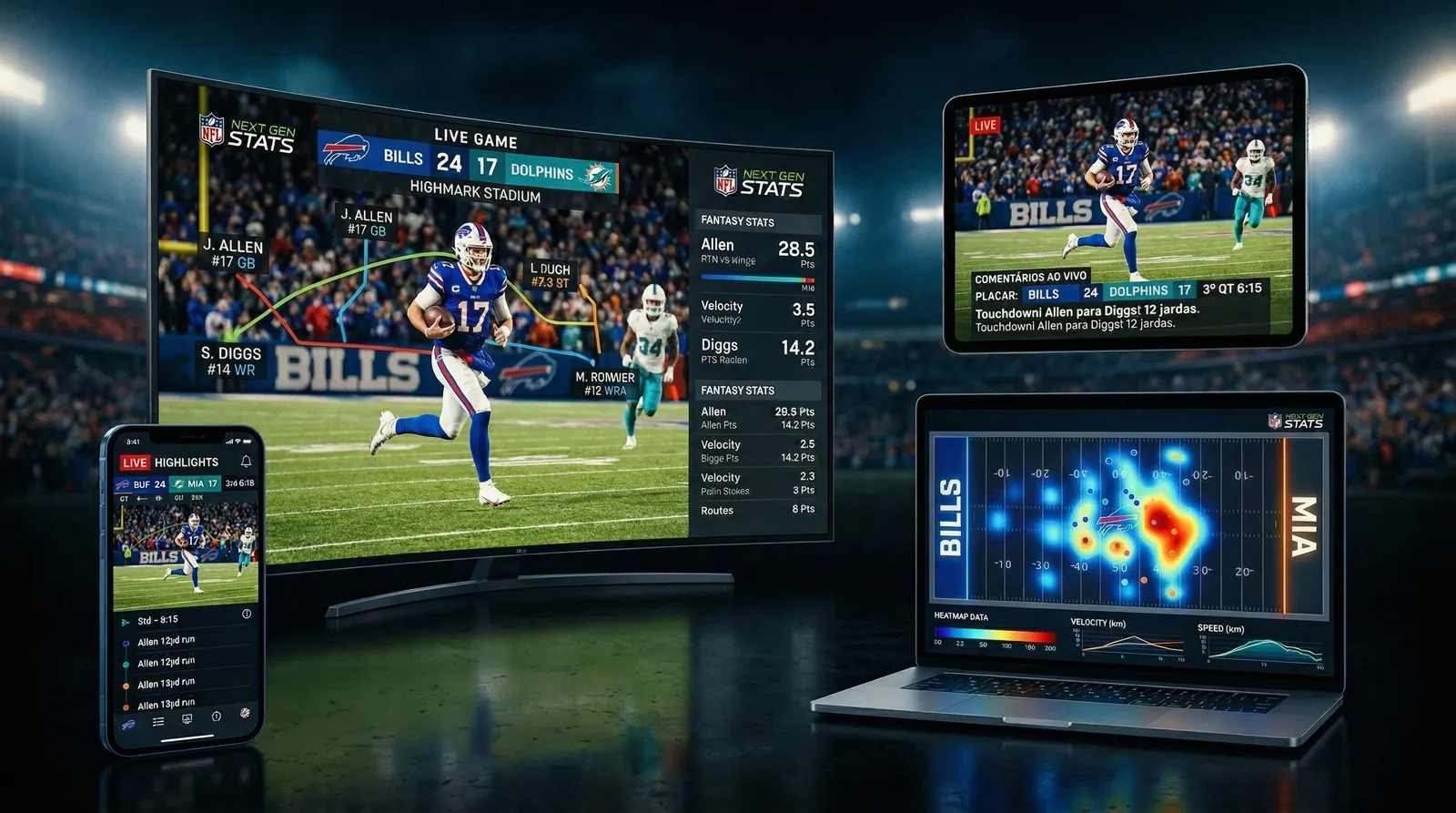
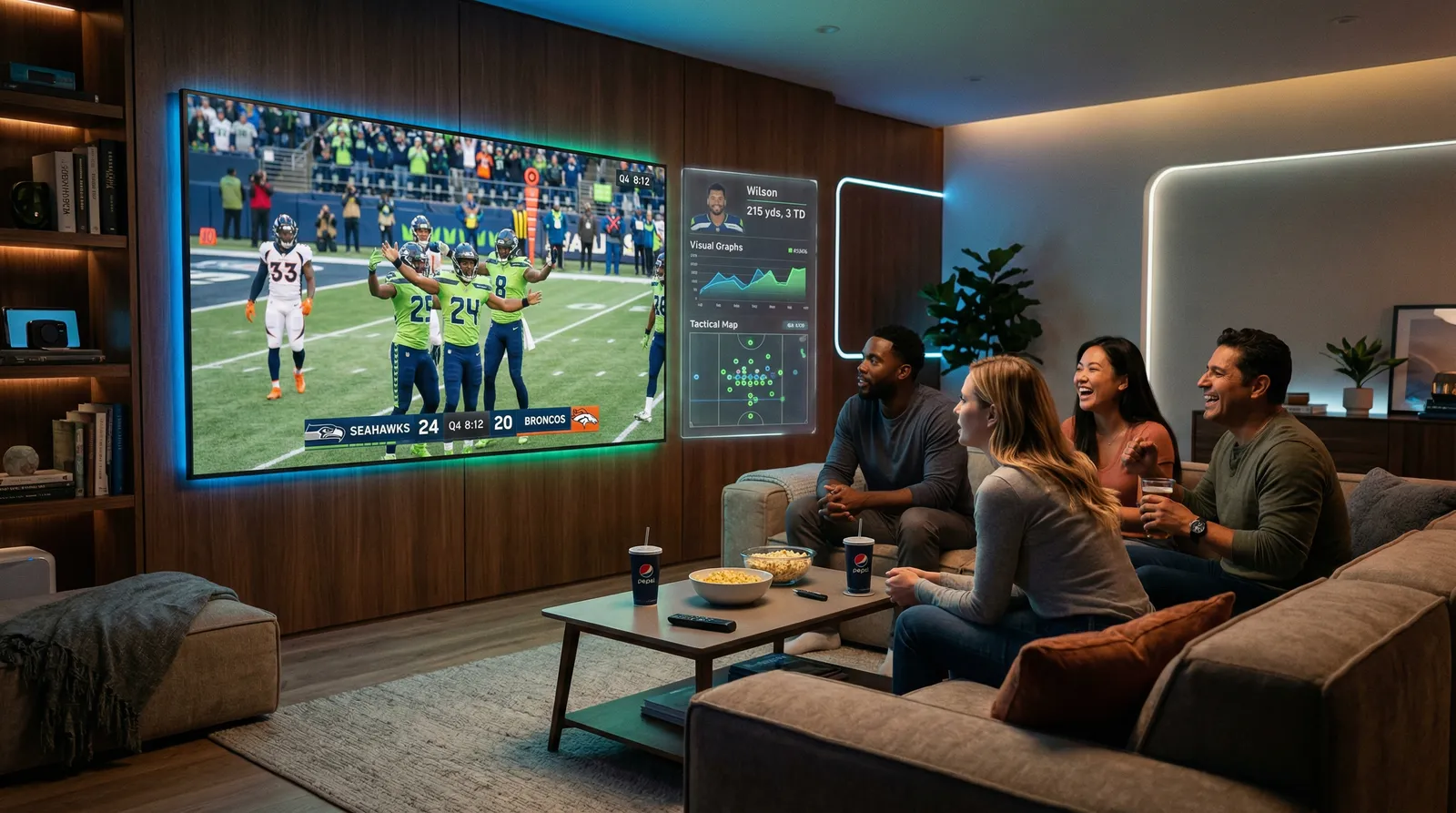
A personalized broadcast isn't just picking a camera feed — it's a different broadcast generated in real time, where camera work, replays, and commentary all reinforce one viewing preference.
Imagine you're a Boston Celtics fan watching a game against the Los Angeles Lakers. A personalized broadcast shows you the Celtics' perspective: when the Celtics have possession, the AI camera favors their side of the court, shows replays of their plays first, and emphasizes their strengths. AI-generated commentary explains their strategy and highlights their execution. When the Lakers score, the broadcast shows the play — but the narrative focus is different: "Here's what Boston's defense needs to adjust."
Or imagine you're a stats-focused viewer. Your broadcast is built around the numbers: possessions per minute, efficiency differential, fourth-quarter execution metrics. The AI pulls up graphics automatically when relevant stats shift. Commentary ties every play to the underlying statistical story.
Or you're a neutral fan interested in player trajectories. Your broadcast follows your watched list of players: when any of them are on screen, the AI emphasizes their performance. When they're off screen, you see less. The narrative is about individual arcs, not team dynamics.
Each of these is a different broadcast. Same game. Same raw video. Completely different viewing experience. That's what "personalized AI broadcast" means technically.
How would an AI director choose what to film and narrate?
AI-directed personalization requires real-time decisions across three layers — camera direction, replay selection, and commentary focus — all coordinated to reinforce a single viewer preference.
Layer 1: Camera direction. Current sports broadcasts use 10–30 fixed cameras placed around the stadium. A human director watches monitors and decides what to show: close-up on the player with the ball, wide shot of the court, overhead view for tactics, close-up on the bench for reaction. An AI director makes these decisions based on viewer preference. A Celtics fan's broadcast keeps the camera close to Boston's players more often. A stats-focused broadcast uses overhead angles more frequently to show spacing and positioning. The AI has been trained on millions of professional broadcast decisions to predict which angle serves each viewing preference best.
Layer 2: Replay selection. After a significant play — basket, turnover, defensive stop — broadcasts show replays. An AI system trained on viewing preference data knows that Celtics fans want to see replays of Celtics plays more often, while Lakers fans prioritize Lakers replays. A neutral viewer might want replays of exceptional plays regardless of team. The AI chooses which replays to feature and in what order.
Layer 3: Commentary. Here's where generative AI becomes essential. A human commentator can't record personalized takes for millions of viewers. But an AI system can. Given a play, viewer preference profile, and real-time game state, an AI voice can generate commentary that emphasizes the relevant narrative: "Boston's spacing is excellent on this possession" (for a Boston fan) versus "Here's where the Lakers' defense broke down" (for a Lakers fan). Same play, different story.
None of these layers exists in isolation. They coordinate. When the AI chooses to emphasize a particular player or team, the camera direction, replay selection, and commentary all reinforce that choice. The result is a coherent, personalized broadcast experience.
What's the difference between filtering and full customization?
Filtering is passive — you pick from pre-produced broadcast versions. AI personalization is active — the broadcast is generated in real time specifically for you, combining preferences no pre-built version could anticipate.
Sports streaming platforms already offer filtering: choose which teams to follow, mute commentators, select camera angles. A platform with pre-recorded filtered broadcasts can offer a Celtics-focused feed, a Lakers-focused feed, or a neutral feed — but you're limited to the options someone produced in advance.
A personalized AI broadcast doesn't pick from a menu. It creates. The AI can incorporate live changes to your preferences, combine preferences in ways not pre-produced (e.g., "I care about this specific player and these specific statistics but want minimal commentary"), and adapt as your interests shift during the game. If you've been rewinding Jayson Tatum's mid-range jumper for four games, the system knows — and your next broadcast adjusts without you asking.
The computational cost is higher, but the personalization depth is qualitatively different. That's why it requires real-time AI systems, not just filtering infrastructure.
Why hasn't this happened yet — and why is it arriving now?
Three technical blockers were just removed: generative video now approaches broadcast quality for sports, AI commentary has become credible, and real-time coordination costs dropped enough to make it economically viable.
In 2022–2023, generative video models couldn't produce broadcast-quality output. By late 2025–early 2026, systems like OpenAI's Sora and Runway ML have improved enough that sports video — which is actually easier than general-use generative video because stadiums have predictable camera positions and limited visual variability — is approaching production-ready output.
Similarly, AI voice synthesis for sports commentary was robotic and unconvincing two years ago. Modern text-to-speech and generative voice models have improved enough that AI commentary in a sports context is now credible to casual listeners. Not indistinguishable from a human — but acceptable for streaming contexts where viewers have already opted into the technology.
Third, coordinating real-time personalization at scale was computationally prohibitive. Cloud video processing has gotten cheaper at roughly the same rate Moore's Law predicts, and edge processing has gotten smarter. The economics now work at streaming platform scale.
The inflection point is 2026–2027. The first producer to deploy personalized AI broadcast will likely be a premium streaming service — ESPN+, Apple TV+, or a new entrant — offering it as a differentiated tier. Others will follow within 18 months.
What data does personalization require, and who owns it?
Personalization draws from three data sources — explicit preference, implicit viewing history, and behavioral signals — and no platform has clearly resolved which of those belong to the viewer versus the service.
Explicit preference is straightforward: "I follow the Celtics," "show me stats," "I'm interested in this player." You control it, you can change it, and clearing it is simple.
Implicit data is darker. Your viewing history — which teams you watch more, which commentators you rewatch, which stats you pause on — reveals preferences whether you state them or not. Sports platforms already collect this data. Personalized AI broadcast makes it directly actionable in ways casual viewers won't fully understand.
Behavioral signals are the edge case. How long do you watch replays? Do you fast-forward through certain types of plays? Do you switch streams during specific moments? This data tells the system what you find engaging even if you never state it explicitly. Sports platforms don't yet collect this granularly — but personalized broadcast infrastructure would require it.
Here's the ownership problem: sports platforms will argue they own this data because they're the intermediary collecting it. Players will argue their likenesses and performances are being used to generate personalized content without compensation. Viewers will argue their behavior shouldn't be tracked so granularly. Regulators — the FTC in the US, GDPR authorities in Europe — will likely intervene once personalized broadcast deployments become visible to mainstream media coverage.
How will sports leagues respond, and who gets paid?
Leagues have two competing incentives — capturing personalization revenue and controlling how their sport is represented — and player unions will demand compensation the moment AI-generated commentary uses recognizable names and voices.
The revenue opportunity is real. If 30% of viewers upgrade to personalized broadcasts at a 50% price premium, that's meaningful incremental revenue for platforms paying league rights fees. Leagues want a cut. Platforms want the feature to be exclusive or at least differentiated enough to justify premium pricing.
The control problem is newer. If an AI system generates commentary about a player, and it's factually wrong or misleading — or systematically favorable to one side in a way that distorts the broadcast's credibility — who's responsible? If a personalized broadcast is designed to maximize engagement via confirmation bias (always showing your team performing well, minimizing the struggle), is the platform misrepresenting the sport?
Player unions will demand compensation. If AI generates a synthesized voice that sounds like a retired commentator to provide personalized narration, does that commentator get paid? If AI creates virtual representations of plays using generative video, is that a "performance" requiring compensation under existing broadcast agreements?
The most likely outcome: leagues establish approval processes for AI-generated commentary content, players negotiate opt-in terms, and platforms pay incremental licensing fees to leagues. It'll be messy and litigious for two to three years. The precedent being set now in AI voice licensing and music will probably carry over directly to sports.
What this means for fan culture and sports identity
Personalized sports broadcasts might seem purely convenience-driven. They reshape what "watching the game" means culturally.
Currently, most fans watch the same broadcast. Regional broadcasts mean Celtics fans and Lakers fans hear different commentary, but the camera work and replays are usually the same. There's a shared visual experience of the game, even when perspectives differ. The iconic moments — the shot, the stop, the collapse — are witnessed identically.
Personalized broadcasts fragment that. Each viewer sees a slightly different game. Over time, this creates a tribal separation: fans literally seeing different narratives of the same events. When leagues show a highlight reel or coaching film on social media that contradicts what a personalized broadcast showed you, trust erodes. Sports culture has always depended on a common version of what happened.
There's also a wealth angle. Personalized broadcasts will command a premium. Fans without the premium tier see the standard broadcast. Committed fans who pay see the personalized experience. Sports have always had tiers of access — tickets versus TV, courtside versus nosebleeds — but this is a tier applied to the fundamental experience of watching the same event.
Finally, there's the confirmation bias problem. Platforms will discover that personalizing toward a viewer's rooting interest drives engagement — it feels good to watch a broadcast that frames your team positively. That's a business incentive to skew the story. Whether that counts as editorial distortion or user preference fulfillment is a question the industry isn't ready to answer.
What does personal broadcast mean for the future of sports viewing?
Personalized AI broadcast is an inflection point — once deployed, the technology advances quickly and the competitive pressure on other platforms to match it is immediate.
2026–2027: Beta deployments. Premium feature. Limited personalization — team/player preference, basic narrative focus. User data collection accelerates. Leagues watch closely but don't intervene yet.
2028–2029: Mainstream adoption. Major sports embrace it. Personalization depth increases: AI learns not just which team you follow, but which style of play you prefer, which players you enjoy watching together, which commentary style resonates. You're no longer just watching "Celtics vs. Lakers." You're watching "Celtics vs. Lakers optimized for defensive intensity" or "optimized for player trajectory narratives." Entirely different broadcasts of the same game.
2030+: Fragmentation and regulation. Privacy regulators have intervened. Data collection is restricted in certain jurisdictions. Some personalization features are banned. Alternative business models emerge — paid personalization tier, ad-supported personalization, league-controlled personalization with fixed guardrails.
The key unknown: will AI-generated sports broadcasts ever feel as emotionally resonant as human-directed ones? That's a question viewers will answer with their engagement metrics. If the answer is no, personalized broadcast becomes a niche premium feature. If yes, it becomes the default — and traditional broadcast becomes what radio is to streaming.
Sources
- OpenAI Sora — Generative Video Model and Production Readiness Documentation
- Sportradar Media Solutions — AI Commentary and Automated Production (2025)
- Amazon Web Services — Real-Time Sports Data and Parallel Feed Generation
- Stats Perform Opta Vision — AI-Generated Match Reports and Viewer Preference Personalization
- FTC — Consumer Data Privacy Framework and Enforcement Guidance
- GDPR — European Data Privacy Framework Applicable to Streaming Personalization
Related Articles on Nexairi
Explore on Amazon
The Nexairi Sports Desk covers professional and collegiate athletics through the lens of analytics, economics, and the forces reshaping competition. We follow the NBA, NFL, NHL, and the business of sport.
More from this desk