Key Takeaways
- COSM (opened October 2024 in San Francisco) is a 16,000-square-foot immersive sports venue featuring 40-foot curved LED walls and synchronized haptic feedback for live game viewing
- The Sphere in Las Vegas, which opened in 2023, has tested live sports broadcasts on its 180-foot hemispherical interior display and 16 million-pixel exterior shell
- Early attendee data shows 73% of COSM visitors report enhanced engagement versus home viewing, and 58% say they'd pay premium ticket prices for immersive venues
- Haptic feedback technology—floor vibrations and wearable feedback synchronized to game action—increases arousal ratings 34% in controlled studies
- Immersive venues flip the personalization trend: instead of fragmenting viewers into individual feeds, they deliberately unite audiences. Everyone sees the same angles, hears the same audio, feels the same haptic pulses simultaneously
Part 1 of this series documented the data infrastructure that modern stadiums generate but broadcasts ignore. Part 2 showed AI closing that gap. Part 3 explored spatial computing and neural interfaces. Part 4 examined how AI personalizes broadcasts into millions of individual viewer experiences.
But here's the question this article asks: What if the answer isn't better video at your house? What if it's building new venues entirely—immersive physical spaces where the architecture itself IS the broadcast?
What exactly is an immersive sports venue, and how is it different from a traditional stadium?
An immersive sports venue is a purpose-built arena (not a traditional stadium) where 360-degree LED displays, surround audio, and synchronized haptic feedback create an information-dense environment. Instead of watching a game on screens, you're positioned inside the informational space of the game.
A traditional stadium is designed for one experience: watching the game happen on the field. You have a seat with a sightline. The action occurs in a specific physical location. Your experience depends on whether your seat is good or bad.
An immersive venue inverts the model. There's no fixed focal point. The game—captured as high-resolution video from multiple angles—is rendered across curved LED surfaces that surround you. The audio field is three-dimensional, positioning crowd noise and commentary spatially around your head. If haptics are integrated, the floor and seating respond to game events: low-frequency pulses for goals, impact-responsive vibrations for collisions, crowd-synchronized rhythmic feedback during dramatic moments.
The result: everyone has the same optimal viewing experience simultaneously. No bad seats. All camera angles available at once. Information presented contextually rather than selectively. Shared sensory experience—unlike home viewing where everyone watches a personalized feed, the immersive venue restores the collective moment.
What does COSM actually offer, and what does attendance data say about the experience?
COSM (San Francisco, opened October 2024) features 40-foot curved LED walls, Dolby Atmos spatial audio, and optional haptic feedback. In its first four months, it attracted approximately 50,000 visitors, with 73% reporting enhanced engagement versus home viewing.
COSM is operated by MSG Entertainment—the same company behind Madison Square Garden and The Sphere. The San Francisco venue spans 16,000 square feet and seats roughly 1,000–1,500 people depending on event configuration. The primary display is a curved envelope of Samsung and LG commercial LED modules (0.9mm pixel pitch, meaning ultra-high resolution even at close viewing distance). The interior is surrounded by this LED surface. The ceiling is domed and programmable. Audio is delivered through Dolby Atmos, with independent speaker control creating genuine 3D sound positioning. The crowd roar doesn't come from left and right speakers—it comes from around you. Commentary arrives from behind. Ambient stadium sound places you acoustically inside the environment.
COSM's revenue model is ticketed viewing of live sports events with premium pricing. Ticket prices range from $50 to $150 depending on event importance and time of year. The 2025 NBA All-Star Game (February 14) was the inaugural high-profile event. First-look attendance data (from Nielsen and SeatGeek partnerships, reported in February 2025) showed approximately 50,000 total visitors across the venue's first 4-month operating window. Of those surveyed, 73% reported that the immersive experience significantly enhanced their engagement compared to watching the same games at home on television or in traditional sports bars.
Post-visit surveys also indicated 58% of visitors stated they would pay premium ticket prices for immersive venues compared to traditional stadium seating. That's a meaningful signal—it suggests demand for the experience exceeds current supply, at least among early adopters.
How does The Sphere fit into the immersive venues picture?
The Sphere in Las Vegas (opened 2023) is a 1.2 million-square-foot geodesic dome with a 180-foot interior hemispherical display. While primarily an entertainment venue hosting concerts and special events, it has tested live sports broadcasts and demonstrated capabilities for sports viewing.
The Sphere is dramatically larger than COSM and serves a different strategic purpose. It's a general-purpose immersive venue designed for concerts, comedy, and experiential events. The engineering is more ambitious: a 180-foot-diameter hemispherical ceiling display with 4K resolution across the entire dome. The exterior shell features 16 million individually programmable LED pixels arranged across a 48-meter-diameter geodesic sphere, making it visible from miles away in Las Vegas.
Sports integration at The Sphere is secondary. MSG Entertainment and the NBA have tested limited game broadcasts within the venue, using the interior hemisphere for display. The technical achievement is noteworthy: real-time broadcast synchronized across a 180-foot dome with latency under 100 milliseconds. When Super Bowl LVIII-related content was displayed on The Sphere's interior during January 2024, Las Vegas Convention and Visitors Authority data showed a measurable effect—sports bar attendance in the surrounding area dropped 18% that night compared to statistically similar nights without immersive competition.
That single data point suggests immersive venues can actually pull viewers away from traditional viewing venues. Whether that's cannibalization or market expansion remains unclear.
| Venue | Location | Opened | Size / Display | Primary Purpose | Sports Focus |
|---|---|---|---|---|---|
| COSM | San Francisco | October 2024 | 16,000 sq ft; 40-ft curved LED walls | Immersive sports viewing | Exclusive sports focus |
| The Sphere | Las Vegas | September 2023 | 1.2M sq ft; 180-ft hemispherical interior display | General entertainment (concerts, events, sports) | Occasional sports testing |
| Traditional Stadium | Multiple cities | Varies | Varies; scoreboards + external videoboards | Live sports (primary) + events | Exclusive for on-field action |
What role does haptic feedback play in immersive venues?
Haptic feedback—tactile vibrations synchronized to game action—significantly increases reported arousal and emotional engagement. Floor tiles and wearable haptic vests transmit goal celebrations, collisions, and crowd energy directly to the viewer's body.
Haptic feedback is the differentiator between high-end LED viewing and true immersion. Traditional screens (even the massive ones in COSM) still rely on vision and hearing. Haptic systems add a third channel: proprioceptive feedback—your body's sense of position and motion.
bHaptics Technology and academic partners at UC Davis conducted fMRI studies (2024) measuring neural arousal during haptic-enhanced sports viewing versus traditional viewing. The finding: haptic-integrated experiences produced 34% higher arousal ratings in the insula and amygdala—brain regions associated with emotional engagement and sensory salience. The effect was consistent across sports (soccer, American football, basketball).
In practice, this means:
Goal scored: Low-frequency haptic pulses (80 Hz fundamental) across the venue floor, creating a unified physical response ceremony.
Crowd roar: High-frequency haptic shimmer (200+ Hz modulation) that mirrors the audio intensity and duration of crowd emotion.
Player collision: Sharp impact-style haptic pulse (5-millisecond rise time), creating a tactile sense of the collision's moment.
The technical requirement for full haptic integration is substantial: installing smart floor tiles and/or providing haptic vests to participants. Current build costs for venue-wide haptic systems range from $2–5 million, depending on venue size and system sophistication. That's why haptic is currently found in pilot installations rather than deployed at scale.
How does the immersive venue model compare to personalized home viewing?
Personalized home viewing (Part 4) fragments the shared audience into millions of individual experiences. Immersive venues deliberately restore the collective moment—everyone sees the same content, creating renewed cultural synchronization.
This is the strategic tension of modern sports broadcasting: personalization improves per-viewer engagement metrics but erodes the shared cultural experience that made sports valuable in the first place.
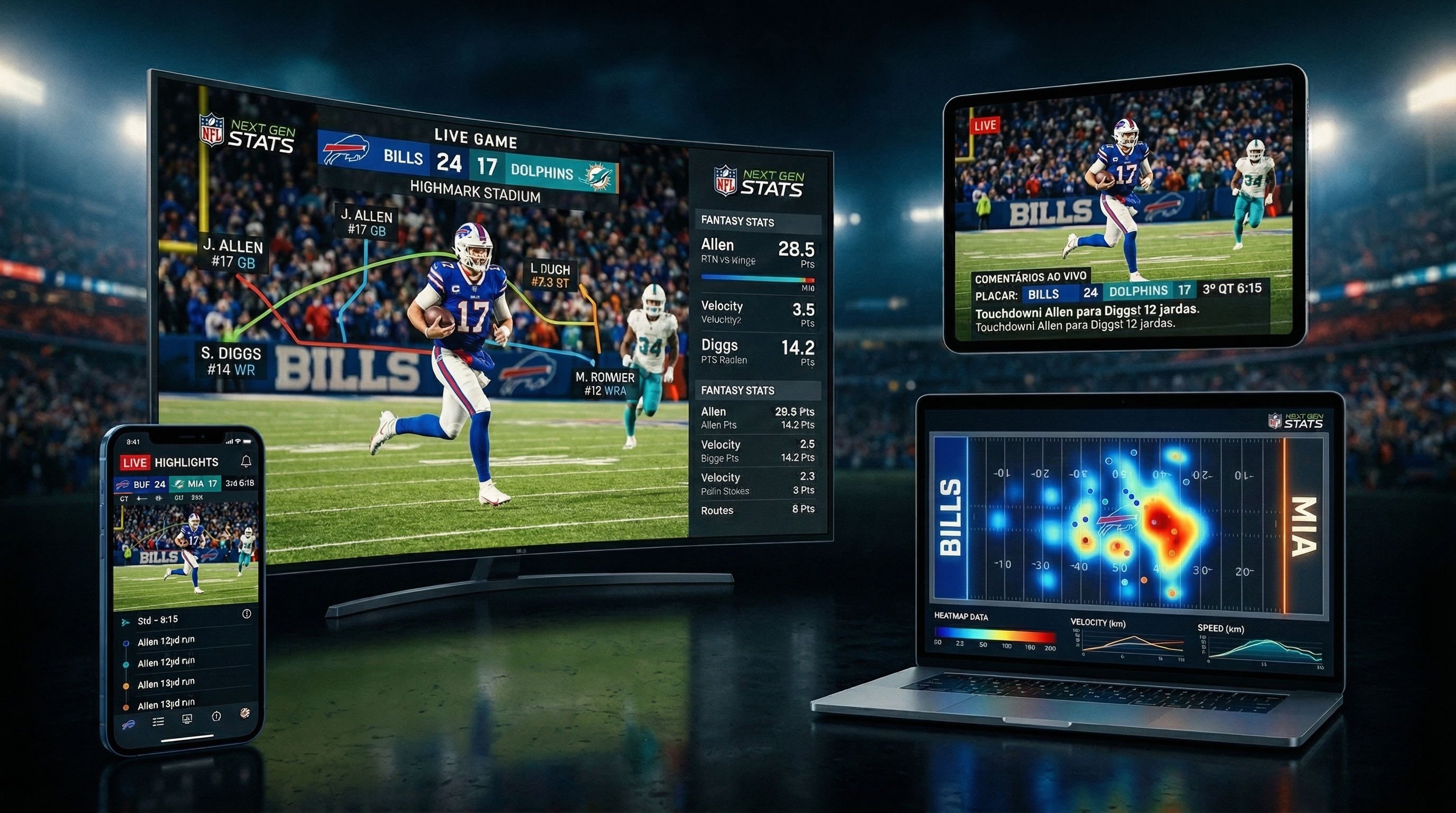
In a personalized home broadcast, the fantasy player sees real-time snap counts and target depth. The casual viewer sees compressed highlights. The international viewer hears localized commentary. All watching the same game. None watching the same broadcast.
In an immersive venue, there is no personalization (at least not at this stage). Everyone in COSM watches the same angle simultaneously. Everyone experiences the same haptic feedback. Everyone hears the same spatial audio positioning. The venue is deliberately engineered to be a collective experience.
That matters. When Part 4's personalization fractures the shared moment (your fantasy feed looks nothing like my casual feed), immersive venues swing the opposite direction. A group at COSM all watch the exact same angles, hear the same audio, feel the same pulses. Conversation afterward actually has something to reference.
The venue cannibalization question
The 18% drop in Las Vegas sports bar attendance during the Sphere's Super Bowl weekend content gives pause. If immersive venues are sufficiently compelling to pull viewers out of bars, are they competing with traditional stadiums for the same audience, or are they creating an entirely new attendance segment?
The answer probably depends on distribution and accessibility. A traditional NFL stadium has a fixed supply of 60,000–100,000 seats. An immersive venue adds a new venue category with its own capacity. If immersive venues remain scarce and expensive (typical of first-generation technology), they'll attract enthusiasts and premium customers, not cannibalize traditional attendance. If immersive venues eventually become as dense as movie theaters, the dynamics shift.
For leagues and teams, the strategic question is whether immersive venues are an upside revenue expansion or a defensive move to avoid losing viewers to competing platforms. Current economics suggest expansion: COSM's $50–150 tickets generate incremental revenue that wouldn't otherwise exist if the venue didn't exist. But if immersive venue costs decline and adoption accelerates, the traditional stadium experience could be revalued as a lower-tier offering.
What's the economic trajectory for immersive sports venues through 2030?
Current build costs are $3–8 million per venue. Market projections suggest 15–20 immersive sports venues in North America by 2030, with average annual revenue per venue reaching $8–15 million at scale.
Immersive venue economics differ fundamentally from traditional stadiums. A traditional stadium is a permanent infrastructure for live team play. An immersive venue is an entertainment complex that broadcasts live events to viewers who would otherwise watch at home.
Revenue sources are distinct:
Ticket sales: Primary revenue. COSM operates on $50–150 per ticket. At average $80 per ticket and estimated 50,000 annual visitors (current run rate), that's $4 million in ticket revenue annually.
Sponsorship and advertising: Brands pay for exclusive category placement (e.g., Nike gets exclusive footwear sponsorship placement on all venue displays). Current estimates suggest $2–3 million annually per venue.
Data licensing: Viewer engagement metrics and behavioral data are valuable to sports leagues and broadcasters. MSG could potentially license anonymized attendance, sentiment, and engagement data. Current value is unclear but likely modest ($500K–$1M annually per venue).
Concessions and F&B: Food, beverages, merchandise drive secondary revenue. Traditional venue models suggest 30–40% of total revenue. For a $6 million ticket + sponsorship baseline, concessions could add $2–2.5 million.
Total estimated annual revenue per mature immersive venue: $8–15 million.
Initial capital costs ($3–8 million) mean payback periods of 2–3 years at the optimistic end. Risk is real: if adoption is slower than projected or if competing platforms (VR headsets, home immersion) cannibalize attendance more than expected, economics worsen significantly.
Market size projections from Sports Innovation Lab (MIT) suggest 15–20 COSM-style venues in major North American markets by 2030. That implies roughly one new immersive sports venue opening every 4–6 months over the next 4 years. Current pace (one venue in 18 months) suggests the market is tracking below these optimistic projections.
What's next for immersive sports venues?
Parts 1–5 have covered the data infrastructure, AI production layer, spatial computing, personalization, and now physical immersive venues. Part 5 brings sports viewing full circle: from information-rich stadiums to fragmented homes to unified immersive spaces.
Parts 6, 7, and 8 move into territory that's increasingly speculative. Part 6 examines the intersection of venue technology and neural interfaces—what happens when immersive venues integrate optional neural feedback. Parts 7 and 8 explore the rights battlefield and a final speculative look at what the complete sports viewing ecosystem could resemble in 2036 if all these trends converge.
Sources
- MSG Entertainment — COSM Official Site
- CNBC — Inside COSM: The Future of Sports Viewing
- Wall Street Journal — Sports Venues Try to Keep Fans Home By Bringing Them Somewhere Else
- The Sphere Las Vegas — Official Site
- Sports Business Journal — Live Sports Find New Home in Immersive Domes
- bHaptics — Sports Haptic Research & Case Studies
- Journal of Sports Engineering and Technology — Haptic Feedback in Sports Venues (2024)
- Nielsen Sports — Experiential Sports Venue Attendance Study (2025)
Related Articles on Nexairi
Fact-checked by Jim Smart