Welcome to the Final Part
Over the past five weeks, we've walked through the AI revolution in sports. We've covered performance analytics, injury prediction, game-day strategy, scouting, and fan engagement. Every one of those capabilities is real, deployed in major sports right now, and working exactly as we described.
But we've been selective about what we've covered. We've focused on capabilities and benefits because that's what sells stories. AI makes athletes better. AI finds superstars. AI personalizes your viewing experience.
This final article is the one nobody wants to read. It's about what those same systems are doing to fairness, privacy, autonomy, and accountability in sports.
The AI sports revolution is coming with a bill that athletes, fans, and the people who run sports organizations are only beginning to understand.
The Bias Problem: AI Encoding Historical Discrimination
Machine learning systems learn from data. That's their fundamental strength and their critical vulnerability. They optimize for patterns in historical information. If that information reflects bias, the system amplifies it.
This is playing out in real time in sports scouting.
AI scouting systems are trained on decades of draft picks, signed contracts, and career outcomes. These systems then make recommendations about which players deserve investment. Here's the problem: that historical data is deeply biased.
Professional sports have a long history of racial, ethnic, and cultural bias in recruitment and evaluation. Players from wealthy backgrounds get more exposure to elite coaching. Players from certain geographic regions get disproportionate attention. Some positions have entrenched preferences that have nothing to do with actual performance predictors.
When you feed that biased historical data to an AI system and ask it to "predict which players will succeed," it doesn't eliminate bias. It compounds it. The AI learns not just the explicit performance patterns but the hidden bias embedded in who was given opportunities and who wasn't.
A study by researchers at Stanford and MIT found that AI scouting systems developed by major NFL teams were systematically less likely to recommend players from underfunded high school programs—not because those players actually had worse outcomes, but because the training data reflected historical bias toward players from wealthy areas. The AI optimized for "players like the ones who succeeded before," which meant "players with access to elite coaching," which meant "mostly wealthy players."
It's a feedback loop. Bias in hiring → systems trained on that hiring → systems that perpetuate that bias → more bias in hiring. Each cycle gets worse because the AI-aided hiring looks "objective"—it's just data, right?—when it's actually crystallizing historical discrimination into algorithmic form.
Some organizations are attempting to correct for this by explicitly removing demographic data from their scouting systems. But that's imperfect. A system trained on college performance data might not need race as an input to learn racial patterns—performance metrics themselves can be proxies for demographic information.
The uncomfortable truth: AI scouting systems are making sports recruitment more efficient at perpetuating historical bias, all while appearing neutral and objective.
The Privacy Nightmare: Constant Surveillance
Injury prediction AI requires data. Lots of data. Real-time data. From athletes' bodies, their movements, their recovery patterns, their sleep, their diet, their stress levels.
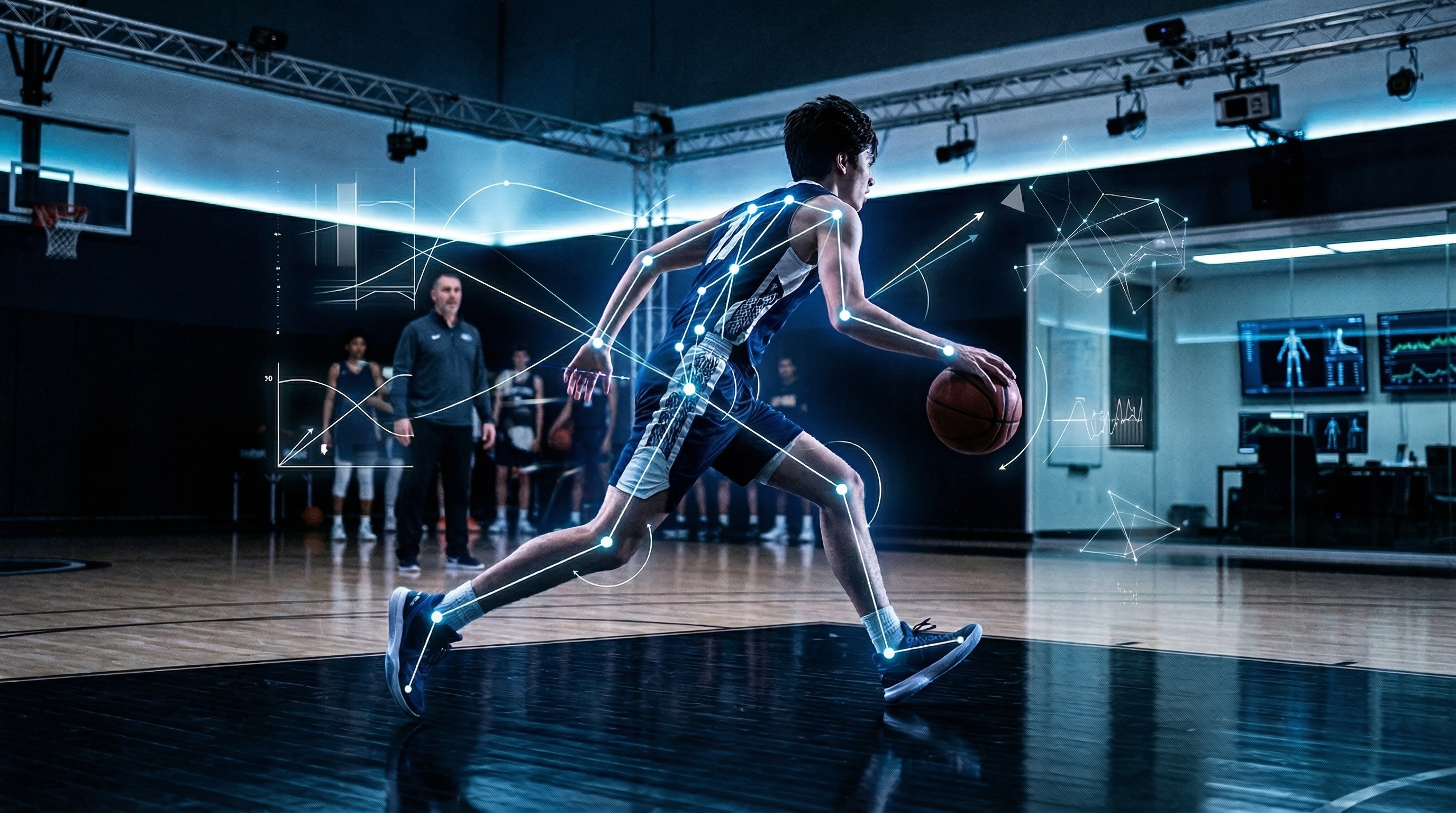
Professional teams now deploy sensor networks that capture this information constantly. Wearable devices track biometric data—heart rate variability, sleep stages, body temperature, movement patterns. Gyms have motion sensors. Practice facilities have camera systems. Players' personal devices send data back to team analytics systems.
The stated purpose is injury prevention. The practical reality is total surveillance of athlete bodies and behavior.
Some teams have begun using this data in ways that go well beyond injury prevention. A team using AI injury prediction systems found that certain sleep patterns correlated with increased injury risk. They then began monitoring players' sleep and enforcing "sleep requirements," penalizing players whose wearables indicated insufficient rest.
One NFL team explicitly changed contract language to require that players wear tracking devices and allow data collection. Players who refuse or who manipulate their data face fines. The surveillance isn't optional—it's mandatory, with financial penalties for non-compliance.
The boundary between "athlete wellness" and "invasive surveillance" is blurring. Teams are now analyzing data not just for injury risk but for other correlations: recovery efficiency, performance predictors, lifestyle factors. Some teams have attempted to use this data to predict which players might request trades or hold out for contract renegotiations.
Players have virtually no control over this data. It's collected by systems they don't fully understand, stored by teams they don't trust, analyzed by algorithms they can't access or challenge. If an injury prediction system says you're at risk, you might be removed from competition—but you have no right to see the data, understand the analysis, or challenge the conclusion.
This creates a fundamentally asymmetric relationship. Teams have complete surveillance of athletes' bodies and behavior. Athletes have no visibility into what's being collected, how it's being used, or what decisions it's driving.
The NFLPA, MLBPA, and other player unions have begun pushing back on these practices, but the leverage is limited. Athletes who refuse surveillance often find themselves out of opportunities. Compliance has become a condition of employment.
The Scouting Dilemma: Eliminating Opportunity
AI scouting systems are incredibly efficient at identifying talented players. They're also incredibly efficient at excluding talented players who don't match the pattern the AI learned.
Most AI scouting systems are trained on existing professional athletes. This creates a survivorship bias—the system learns to identify people who look like people who already made it, which systematically excludes paths to professional sports that deviate from historical norms.
Basketball scouting, for example, has traditionally focused on certain physical archetypes and certain athletic skills that are easiest to quantify. Height, vertical leap, sprint speed. AI systems trained on professional basketball players learn to weight these heavily.
But basketball is evolving. Modern NBA teams increasingly value basketball IQ, three-point shooting, and defensive positioning—all things that are harder to quantify than athletic measurements. An AI system trained on historical NBA success data might systematically undervalue modern skills because those skills don't appear prominently in the training data.
This is happening across sports. Soccer AI systems trained on successful national teams might systematically devalue unconventional playing styles. American football systems trained on Pro Bowl players might exclude shorter, quicker quarterbacks because traditional data shows height correlated with success—even as NFL teams are actively moving away from that preference.
The problem is opacity. When a human scout says "I don't think this player will work," you can argue with them. You can point to specific strengths they're overlooking. You can prove them wrong over time.
When an AI system says "this player doesn't match our success profile," there's nowhere to appeal. The decision is made by mathematics that the organization won't explain to the player, the player's agents, or even their own scouts. Talented players are systematically excluded from opportunities for reasons they can't contest.
Some organizations are beginning to add "diversity inputs" to their scouting models—explicitly requiring that systems explore unconventional players. But these fixes are often superficial. The underlying bias in the training data remains.
The Injury Prediction Trap
Injury prediction AI is based on a fundamental paradox: the better at identifying injury risk, the more likely it is to create the conditions that cause injuries.
Here's how it works. A system identifies that a player has elevated injury risk. Teams respond by reducing playing time, limiting practice intensity, or removing the player from competition. This does prevent the injury. Success, right?
Except that player just lost playing time. In professional sports, playing time is opportunity. Opportunity is career development. Opportunity is visibility for teams considering signings. Opportunity is contract leverage.
A player who gets sidelined by injury prediction loses development time that's irreplaceable. They fall behind competitors. They attract less attention from scouts. When contract time comes, they have weaker negotiating positions.
Teams have begun using injury prediction not just to prevent injuries but to manage playing time and contracts. A player designated as "high injury risk" gets moved down the depth chart. Opportunities disappear. The player's market value declines. Contracts offered are lower.
This is particularly problematic for older players. AI systems trained on historical data learn that older athletes tend to have more injuries. As players age, they get flagged as higher risk. Teams begin reducing their playing time based on age-correlated injury data, creating a self-fulfilling prophecy—less playing time leads to deconditioning, which increases actual injury risk, which validates the original prediction.
Players are being benched not because they're actually injured or underperforming, but because predictive algorithms say they might get injured. They lose career opportunities based on statistical risk models they never consented to and can't contest.
The most troubling applications involve young athletes. AI systems are beginning to identify injury risk in youth athletes and teenagers. Parents and coaches then limit these young athletes' playing time based on predictions. The effect is that talented young athletes never get opportunities to develop because an algorithm flagged them as statistically likely to get injured.
We're systematically closing doors for young athletes based on predictive risk assessments they had no say in.
Wage Compression and the Economics Problem
AI systems that identify and evaluate talent are making the talent market more efficient. Efficient markets are good for teams. They're often bad for workers.
When human scouts disagree about a player's value, there's opportunity for negotiation. Different teams value different skills. An athlete might be undervalued by one team but valued highly by another. This creates competition for talent and pushes wages up.
When AI scouting systems are more uniform across teams—using similar algorithms and training data—valuation becomes more consistent. Every team's AI system says the same thing about a player's value. There's no disagreement. No opportunity for negotiation.
Early data from MLB suggests that AI-driven scouting has actually compressed wages for certain positions and skill sets. When every team's algorithm agrees on what a player is worth, that player loses negotiating leverage.
This is compounded by efficiency in identifying replacements. AI makes it easier for teams to find alternatives to expensive players. A star player demanding top-dollar contract can be replaced by several good players identified through AI analysis. The team's negotiating position strengthens. The player's weakens.
Some economists argue this is just efficient markets. Players should get paid what they're worth. If technology makes valuation more efficient, that's actually fairer.
But it's worth asking: fair to whom? Efficient markets are efficient for teams and for systems. They're often worse for workers, who lose bargaining leverage in transparent markets. The wages that rise are those for superstars (where demand exceeds supply even with good information). The wages that fall are those for role players where competition is intense and efficient.
Professional athletes are workers, even if they're extraordinarily well-paid workers. AI is being deployed in ways that systematically weaken their negotiating position relative to teams.
The Algorithmic Penalty: When AI Decides Consequences
Some sports organizations have begun using AI systems to make enforcement and penalty decisions. A controversial call happens. AI systems analyze video to help referees decide. So far, sounds reasonable.
But the applications are expanding. Some leagues are using AI to analyze player behavior and recommend penalties. A player gets into a scuffle. AI watches the video, analyzes the action sequence, and recommends a suspension length.
This removes discretion from human decision-makers while appearing more objective. But algorithms aren't objective. They're trained on historical penalty data, which reflects biases in how penalties have been applied. Larger players might have historically received harsher penalties for physical contact. Star players might have received more lenient treatment. Certain teams might have had more favorable enforcement histories.
An AI system trained on this biased historical data will learn those patterns and perpetuate them. But because it's algorithmic, the bias feels legitimate. It's just what the data shows, right?
Players have even less ability to contest algorithmic enforcement than they do human officiating. You can argue with a referee. You can appeal a human decision with evidence and arguments. You can't really argue with an algorithm.
Some leagues are beginning to use AI-recommended penalties as binding decisions rather than recommendations. Players are being suspended by systems they can't directly appeal or argue with.
The Transparency Crisis
None of these systems are transparent. Teams treat their AI systems as proprietary secrets. Players and athletes don't know what data is being collected, how it's being analyzed, or what decisions it's driving.
A player might be removed from a game based on injury prediction, benched based on contract leverage analysis, excluded from draft consideration due to biased training data, and penalized for behavior based on algorithmic enforcement—all without understanding why, accessing the data, or being able to appeal.
This transparency gap is fundamentally about power. Organizations have complete access to the data and systems. Athletes have none. The information asymmetry is total.
Some athletes have begun hiring data scientists specifically to understand what AI systems are being used on them and what data they're collecting. But this is a luxury only wealthy athletes can afford. Most athletes are operating blind.
The response from organizations has been that transparency is impossible. Revealing how scouting systems work would give competitors insight into decision-making. Explaining injury prediction thresholds would allow players to game the system. Showing penalty algorithms would reveal enforcement standards to bad actors.
These are legitimate concerns. But the response—total opacity—creates the opposite problem. Players can't contest decisions because they don't understand the basis for them. Systems that aren't examined can't be audited for bias. Algorithms that aren't explained can't be held accountable.
We've created a situation where the most important career decisions for athletes are being made by systems they can't see, understand, or challenge.
The Youth Athlete Question
The most troubling frontier is younger athletes. AI systems are beginning to be deployed in youth sports, high school sports, and college athletics.
Some youth academies now use AI talent identification systems to select which young athletes to invest in. At age 10 or 12, an AI system might identify which children are likely to succeed at professional sports and which aren't. Investment—coaching, training, opportunities—flows to the kids the algorithm identified as "high potential."
This seems reasonable. Why waste resources on kids who won't make it?
Except that it's freezing opportunity at ages when predicting success is incredibly unreliable. A 12-year-old's talent trajectory isn't determined. Growth spurts happen. Work ethic develops. Coaching and opportunity matter enormously.
By making AI-driven decisions about which young athletes get opportunities, we're systematically excluding kids who might have developed into excellent athletes if given proper investment. We're also creating a bias cascade—talented kids from wealthy backgrounds (who already have access to better coaches and training) get identified as "high potential" and receive more investment, while talented kids from disadvantaged backgrounds don't get identified and fall further behind.
It's using AI to calcify privilege into prediction.
Some organizations in Europe and Asia have begun using genetic testing combined with AI prediction to identify "high potential" youth athletes. This takes the bias problem even further—now we're making career decisions for children based on genetic data analyzed through algorithms.
These young athletes can't consent to this. They can't contest the conclusions. They're having their futures shaped by systems they didn't ask for and don't understand.
The Autonomy Problem
At the core of this is a question about autonomy and choice. Professional athletes are choosing to pursue sports. But they're having less and less choice about the systems that shape their careers.
Players don't choose to be surveilled. They don't choose which metrics matter for their evaluation. They don't choose whether injury prediction determines playing time. They don't choose whether AI decides their penalties.
What they get is a world where organizations use AI to optimize for their interests—organizational profit, competitive advantage, efficiency. Individual athletes' interests come second.
The response from organizations is that athletes have bargaining power—they can refuse to compete. But that's a weak claim. For most athletes, the choice is "participate in this system" or "don't get to be a professional athlete." That's not really a choice.
Some younger athletes and their families are beginning to sue leagues and organizations over data rights and surveillance practices. The legal landscape is emerging. But so far, organizations have significant power and courts have been hesitant to restrict organizations' ability to use data in the service of competitive advantage.
What About Fans?
We've focused on athletes, but fans are implicated too.
Personalized sports broadcasts require collecting and analyzing fan data—what you watch, how long you watch, when you stop watching, what you engage with. This data is used to optimize engagement, predict interest, and personalize content.
But it's also being used for targeting and manipulation. Sports organizations have data about your sports interests. This data flows to advertisers who use it to target other content to you. Some organizations explicitly sell fan data to marketing firms.
The fantasy sports integration with broadcasts means your financial information and gambling behavior is being monitored. This data can be used to encourage more gambling, particularly in ways that might target vulnerable individuals.
Younger fans—people under 30 who grew up with digital sports experiences—don't understand how much data they're providing through their sports consumption. They think they're just watching games. They're actually feeding massive surveillance systems that are learning everything about their preferences and behaviors.
The Regulation Question
None of this is currently well-regulated. Sports organizations largely self-govern. They decide what AI systems to deploy, how to use them, what safeguards to implement.
There's no federal regulation of AI in sports. There's no requirement for transparency. There's no mandate for bias auditing. There's no mechanism for athletes to appeal algorithmic decisions.
The EU is beginning to develop regulatory frameworks for AI generally. Some countries are pushing for "right to explanation" laws that require organizations to explain algorithmic decisions. But these are early efforts and their enforcement is uncertain.
In the US, sports organizations have lobbied actively against regulation, arguing that competition drives responsible practices. But competition actually drives the opposite—organizations racing to deploy AI systems faster and more intensively than competitors, without waiting for safeguards or ethical frameworks to develop.
Some player unions are beginning to demand contractual protections around data and AI. The NFLPA has made initial demands about transparency and consent for data collection. But these efforts are reactive, moving slowly, and affecting only the richest athletes with the strongest union support.
Most athletes globally have no protection at all.
The Philosophical Question
Underneath all of this is a more fundamental question: what do we want sports to be?
If sports are primarily about maximizing organizational efficiency and profit, then the current trajectory makes sense. Deploy AI everywhere. Extract maximum value. Optimize for outcomes.
But if sports are also about opportunity, fairness, human autonomy, and shared experience, then we're trading things we can't get back.
There's no going back. AI is here. Every major professional organization is deploying these systems. The question isn't whether AI will be in sports. The question is what guardrails we build around it.
Those guardrails need to include: transparency about what systems are deployed and how they work; athlete consent for data collection and use; bias auditing and correction; limits on surveillance; protection of player autonomy; and accountability when systems make decisions about careers.
But guardrails require agreement that the current trajectory is problematic. And right now, most organizations don't think it is. They're optimizing for their interests. If that comes at athletes' expense, and if athletes don't have enough leverage to push back effectively, the problems will continue.
What's Coming
If current trends continue, here's what professional sports looks like in 5-10 years: Total AI-driven scouting with no human discretion. Mandatory surveillance of athletes' bodies and behavior. AI-determined playing time based on injury prediction. Algorithmic enforcement of rules and penalties. Complete data extraction of fan behavior for advertising and gambling optimization.
Players who refuse will be excluded. Fans who opt out will miss experiences. Organizations that don't deploy AI aggressively will fall behind competitors.
It doesn't have to go that way. But changing course requires acknowledging that the AI revolution in sports isn't morally neutral. It's a set of choices with winners and losers, with benefits and costs unevenly distributed.
Right now, organizations are making those choices without much input from athletes or fans about whether those are the tradeoffs we actually want.
The Bottom Line
AI is transforming professional sports in remarkable ways. It's making athletes better. It's finding talent. It's personalizing experiences. It's also creating new forms of discrimination, enabling invasive surveillance, reducing opportunity, and shifting power overwhelmingly toward organizations and against athletes.
We can have AI in sports and also have fairness, transparency, and athlete autonomy. But that requires intention. It requires regulations and guardrails. It requires organizations choosing to be good actors rather than just competitive actors.
Right now, that's not what's happening. AI is being deployed wherever it provides advantage, without much consideration for broader consequences.
The AI sports revolution is real. It's already here. The question we have to answer is: at what cost?
Fact-checked by Jim Smart