The Broadcast You Want, Not the One You Get
For a century, everyone watching a football game saw the same thing. The director cut to the wide shot. Then the tight shot on the quarterback. Then the reaction shot. Everyone experienced the game identically—the flow of cuts, the camera angles, the pace of revelation all dictated by a human production team's decisions.
That era is ending. In 2026, sports broadcasts are fracturing into personalized feeds where different viewers see different things simultaneously—and AI is orchestrating the whole operation.
A casual fan watching Sunday Night Football might see traditional broadcast angles. A data enthusiast sees the same game with real-time statistical overlays, snap counts, and personnel packages. A fantasy player sees player-tracking camera work that follows their drafted stars even during down time. A season ticket holder sees augmented reality overlays showing empty seats and concession line wait times.
They're all watching the same game. They're experiencing it completely differently.
The Multi-Angle Infrastructure Revolution
Making personalized broadcasts possible required infrastructure changes that most viewers will never see. ESPN, NBC, and the leagues themselves have been quietly deploying what amounts to omnidirectional capturing of every game.
Modern broadcasts now feature dozens of cameras—stationary, drone, handheld, 360-degree rigs. Some games have 40+ camera feeds running simultaneously. That's not primarily for a single broadcast. It's the raw material for multiple broadcasts.
NFL productions started this. Sunday Night Football now captures every moment from angles that would've been unthinkable five years ago. The data flows into servers that AI systems analyze in real-time, identifying moments worth multiple perspectives. When something important happens—a controversial catch, a key injury, a referee moment—the system flags it and makes that multi-angle content available to personalized feeds.
Apple's new MLS coverage takes this further. Their "Multivew" feature lets subscribers watch up to four simultaneous feeds—one player, one possession, one formation, one traditional broadcast angle. The AI system predicts what the user wants to see and pre-loads options before they're needed.
Your Broadcast, Your Rules
The most straightforward application of AI personalization is giving viewers control over what they see. But that control requires AI to work—predicting and anticipating rather than just reacting.
Player-Centric Views: Want to watch every snap from LeBron James's perspective? Modern sports apps let you select players and watch primarily through cameras tracking them. If your player is off-ball, AI predicts you'll still want to see the action and cuts appropriately, but the tracking camera keeps your player visible using picture-in-picture or angle selection. Fantasy players use this obsessively—watching their drafted players in real-time to verify scoring decisions.
Statistical Overlays: Instead of commentators telling you about someone's shooting percentage, AI can display live stats as players take shots. Every pass gets labeled with expected completion probability based on defender positioning and historical data. Every shooting attempt displays the shooter's season percentage and expected value instantly. Some feeds even show defender positioning data—how many defenders within 5 feet, closest defender distance, how many have hand in passing lanes.
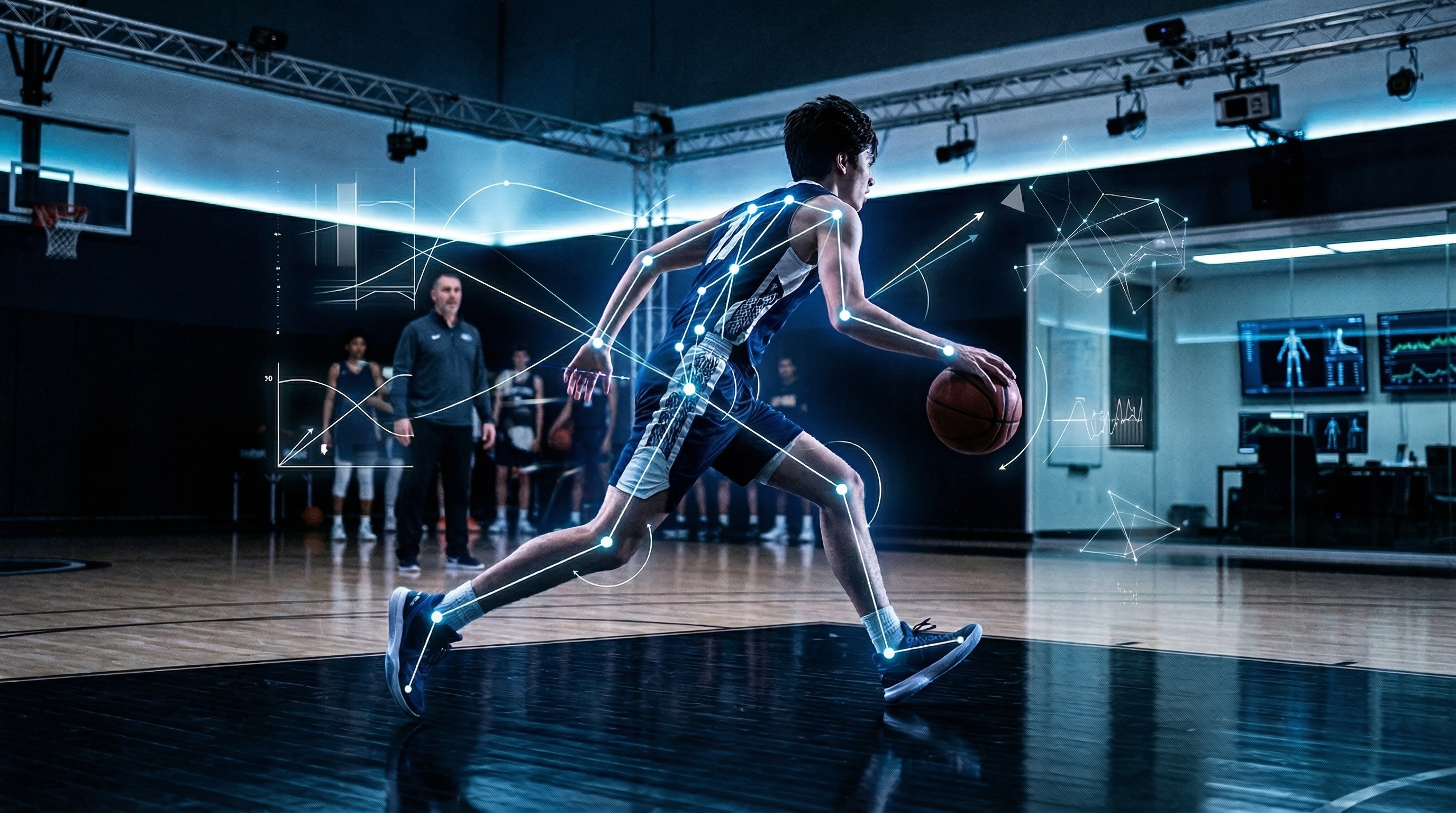
Formation and Tactical Views: For tactical enthusiasts, AI can render games almost like a video game—overhead tactical view showing positioning, passing lanes, and defensive assignments. This view isn't theoretically different from what coaches see on tablets, but it's now available to any subscriber with interest.
Augmented Context: Substitution incoming? AI can overlay the incoming player's stats compared to who they're replacing. Controversial call? Instant replay from the clearest angle with relevant rulebook text displayed. Injury stoppage? Statistics on injury history for the affected player populate automatically.
The AI Director Problem
The philosophical challenge of AI-driven broadcasting is that cutting a sports broadcast is storytelling. A human director doesn't just cut to the best camera angle. They cut to tell a story—build drama, showcase star players, highlight strategic decisions, control the pacing of revelation.
Can AI do that? Sort of. But not the way humans can.
Early experiments with automated directing—AI systems making cut decisions for full broadcasts—have mostly failed. The AI optimizes for "clear view of the action" but misses storytelling nuance. It shows a three-point shooter after they've already released the ball, missing the dramatic moment of release. It cuts too quickly from context to action, losing the buildup that makes sports compelling.
The breakthrough isn't AI replacing directors. It's AI assisting them.
Modern sports production uses AI to handle the high-volume, low-complexity work: automated camera tracking so human operators can focus on framing rather than mechanical following. AI-driven highlight suggestions flagging moments worth multiple angles. Automated graphics rendering—stats, scores, names, timers all handled by systems rather than graphics operators manually creating every graphic.
This frees human directors to do what they do best—tell stories. With AI handling mechanical tasks, production teams can focus on pacing, drama, and the intangible elements that separate good broadcasts from great ones.
For personalized feeds, the calculus changes. A player-tracking camera feed doesn't need dramatic storytelling—the user chose the player, so they want maximum information about that player. An stats-heavy feed doesn't need cinematic cutting—it needs clarity and data density. In these cases, AI can handle the directing because the job has changed.
Real-Time Commentary Generation
One of the most overlooked applications of AI in sports broadcasting is automated commentary. Not replacement commentary—but commentary generation for personalized feeds.
When you're watching a player-specific feed or a statistical breakdown feed, having traditional broadcast commentators doesn't make sense. But silence is boring. Enter AI-generated audio.
ESPN and others have experimented with AI commentary that describes action, provides context, and highlights statistical relevance. Early versions were robotic and poorly timed. But by late 2025, the technology improved dramatically—generating commentary that feels natural, contextually appropriate, and occasionally genuinely insightful.
The best implementations combine AI-generated base commentary with dynamic insertion of pre-recorded analysis from expert commentators. An AI system might set up a moment ("Third and five, defense in zone formation, quarterback Mahomes with 2:15 remaining"), then transition to a pre-recorded clip of an NFL analyst explaining how the defense will likely respond. The result feels natural and informed, combining scale (AI can generate thousands of unique moments) with quality (human experts on critical analysis).
This doesn't scale infinitely. You can't pre-record commentary for every possible game state. But you can record commentary patterns for archetypal situations—"quarterback with scramble room on third and medium," "running back with receivers in bunch formation," "defense in nickel with safeties in coverage." AI maps real situations to these archetypes, generates appropriate intro, and serves the combination to personalized feeds.
Some feeds are purely AI-generated now. Soccer broadcasts for international markets often feature AI commentary in languages where human broadcast talent is scarce. The results are surprisingly good—better at real-time analytics than most human commentators, though lacking personality.
Interactive Fan Experiences
Personalization isn't just passive. It's enabling interactive experiences where fans shape their own broadcasts in real-time.
MLS's subscription service lets fans vote on which player should be featured in the next "highlight moment" feed. The system tracks votes and adjusts angle and focus accordingly. This sounds gimmicky until you realize it's actually driving engagement—people who participate in voting watch more attentively.
NFL-affiliated broadcasts are experimenting with real-time prediction overlays. Before each snap, AI generates predictive distributions ("60% pass play," "40% run") based on game situation and play-calling patterns. Fans can select predictions and earn points for accuracy. It transforms passive viewing into a mini-game.
NBA streams now feature personalized stat-watching. Follow a player's shooting percentage throughout the game. Watch real-time expected value on their shots. Receive notifications when they hit statistical milestones. Some platforms let you set alerts for any player across any game—"notify me when [Player] gets to 20 points"—enabling selective attention across multiple games.
The most sophisticated implementation is probably NASCAR's enhanced broadcast, where subscribers can see real-time telemetry from selected drivers—G-forces through turns, brake pressure, throttle input. You're watching the race while literally seeing the data drivers use. It requires advanced UI design and careful pacing to remain comprehensible, but when done well, it deepens engagement rather than overwhelming viewers.
Fantasy Sports Integration
The symbiotic relationship between fantasy sports and broadcast technology was already deep. AI made it intricate.
DraftKings, FanDuel, and other platforms now integrate directly with broadcasts. Watch a game, and your fantasy points update in real-time on-screen. Underlying analytics show you expected value on remaining plays—if your QB throws a touchdown pass, you gain these points; if they throw an interception, you lose that.
This creates a weird dynamic where the broadcast itself becomes a tool for real-time decision-making. Late in Sunday Night Football, if your team still needs points, you see exactly which remaining matchups offer the highest EV for your fantasy lineups. It's part broadcast, part financial instrument.
The leagues haven't fully figured out whether this is good for their sport. On one hand, it drives engagement—people watch sports longer if they have financial skin in the game. On the other hand, it potentially degrades the aesthetic experience. Some viewers report that fantasy overlays make it harder to appreciate sports as games rather than data sources.
But the genie is out of the bottle. Younger viewers, particularly, now expect broadcast integration with fantasy platforms. Traditional broadcast without fantasy stat integration feels incomplete to them.
The Advertising Problem (and Opportunity)
Personalized broadcasts create a headache for sports advertising. When everyone sees the same broadcast, advertisers know that a 30-second Super Bowl spot reaches a consistent audience. When feeds diverge, measurement becomes impossible.
This triggered a crisis in sports advertising that's still unfolding. Networks had to rethink monetization. The traditional model—standard feed, standardized ads—doesn't work when feeds fragment.
The solution is AI-driven personalized advertising. Different viewers see different ads, optimized for their profiles. A 22-year-old fantasy player might see ads for sports betting apps. A 45-year-old watching traditional broadcast sees ads for cars and insurance. A wealthy subscriber might see luxury watches and premium beer. A cost-conscious viewer might see value-oriented products.
This is more efficient than traditional broadcast ads. Each viewer sees ads supposedly relevant to them. Advertisers pay premium rates because targeting is precise. But it also raises privacy concerns—it requires detailed profile data that viewers may not fully understand they're providing.
Some premium subscription tiers now explicitly promise "AI-optimized ad-free" experiences—they're selling the privacy benefit alongside the personalization. For mainstream broadcasts, ads remain but are personalized, with the same data used for content optimization used for advertising optimization.
Stadium Experience Augmentation
Here's where it gets weird: AI personalization extends to people physically present at games.
Stadium video boards are increasingly AI-driven, showing different content to different sections. If a specific team's fans sit behind one end zone, video board AI can display content that appeals to them while showing different content to the opposing side. This is partly entertainment, partly psychological—home-field advantage including the scoreboard.
Augmented reality apps for stadium attendees are more sophisticated now. Point your phone at a player, and AI provides their statistics, injury history, contract details. Watch a replay on the stadium screen, and AR apps on your phone show the angle you're missing on the main screen. You're physically present but augmented.
Some stadiums experimented with AI-optimized seat recommendations. Based on your ticket history, preferences, and game circumstances, the system suggests seat upgrades or alternative games you might prefer. If you usually buy upper-deck seats, AI might flag a mid-level seat available at face value that offers better value than your typical choice.
The most intrusive applications are mobile apps that track your movement through stadiums using WiFi and Bluetooth, showing personalized concession recommendations ("Your usual beer is served at stand 7, 50 steps away"). Convenience or surveillance depending on your perspective.
The Retention and Growth Dynamics
Why are sports organizations investing so heavily in AI personalization? Because it works for engagement and retention.
NBC Sports found that viewers with personalized feeds—particularly player-tracking feeds—watch games 40% longer than viewers with standard broadcasts. They're less likely to switch channels during ad breaks because they're more engaged with the content. They watch more games across the season because personalization extends to discovery (AI recommendations highlighting games that would interest them based on historical preference).
League data shows that young viewers—the demographic most likely to cut the cord on traditional cable—watch significantly more sports when personalized feeds are available. It's one of the few things that has actually reversed the decline in sports viewership among millennials and Gen Z.
Subscriber retention data mirrors this. Streaming services with strong personalization features retain subscribers at higher rates. Sports fans will tolerate ads, mediocre interface design, and occasional technical issues if personalization meets their expectations. But if feeds feel generic or fail to capture their interests, they churn to competitors.
International Broadcasting Transformation
AI personalization has been transformative for global sports distribution. Soccer, in particular, has seen unprecedented expansion of audiences through personalized international broadcasts.
Premier League matches now generate commentary and graphics instantly in 20+ languages using AI systems. English commentary can be stripped and replaced with AI-generated or human-recorded audio in languages where human broadcast talent isn't available. Graphics render in regional formats—metric for Europe, imperial for US, regional team colors for local feeds.
This has changed the economics of sports distribution. Games that would be unprofitable to produce separate broadcasts for can now profitably serve global audiences with personalized content. A midweek Championship match that would've never been distributed internationally now reaches thousands of viewers globally with tailored broadcasts.
As we covered in our article on niche sports reshaping audiences, this is accelerating the fragmentation of viewership. Global audiences for sports are larger than ever, but more distributed across matches and leagues than they used to be.
The Homogenization Problem
There's a dark side to this technology that's worth acknowledging. As personalized feeds proliferate, shared cultural experience around sports is eroding.
Fifty years ago, millions of people watched the same broadcast, saw the same commercials, experienced the same dramatic moments in the same order. They could have conversations about the broadcast the next day confident everyone saw approximately the same thing.
That's no longer true. Your personalized feed showed different angles, different statistics, different commentary, different ads. The fan next to you saw something completely different. You experienced the same game but not the same broadcast.
This fractures the communal experience of sports. It makes it harder to create shared cultural moments. The Super Bowl persists as a shared experience because everyone, even personalization-obsessed viewers, wants to see the same broadcast for the biggest game. But for regular-season games, the audience is increasingly splintered.
Some observers argue this is healthy—personalization serves diverse interests better than one-size-fits-all broadcasting. Others worry it's eroding sports as a universal cultural touchstone. The truth is probably both.
What's Next
The next frontier in AI-driven sports broadcasting is predictive narrative. Systems that don't just respond to what's happening but anticipate what will happen and prepare content accordingly.
Imagine an AI system that knows a quarterback has a 15% chance of getting injured in the next play based on formation analysis. It pre-loads injury history information, comparable-player recovery timelines, and backup quarterback statistics—so if the injury happens, personalized feeds immediately serve all relevant context without lag.
Or a system that analyzes game flow and momentum shifts, predicting which plays are likely to be controversial and pre-loading rulebook explainers and alternative angles before the official makes a call.
These aren't far off. Some organizations are already testing predictive graphics systems that have content ready before human operators have recognized the moment as important.
The ultimate question is whether AI will eventually handle so much broadcast decision-making that human directors become unnecessary. The current consensus—AI assists, humans direct—could shift if the technology improves enough. We're not there yet, but the trajectory is clear.
The Bottom Line
AI has transformed sports broadcasting from a mass-market experience into a personalized service. Every viewer can now see something different, optimized for their interests, knowledge level, and engagement patterns. It's made sports more accessible to diverse audiences but fractured the shared cultural experience that once unified sports fans.
The technology enables both enhancement and degradation—more engagement for some, more atomization for others. But the trend is clear: the days of everyone watching the same broadcast are ending. AI is ushering amid bespoke sports experiences tailored to individual preference.
Whether that's progress or loss depends on what you value—shared cultural moments or personalized optimization. But there's no going back.
In our final article, we'll bring it full circle: how all these AI systems—from scouting to fan engagement—are reshaping the business of sports itself. Team valuations, broadcast rights, sponsorship structures—everything is changing as AI changes what sports actually are.
Fact-checked by Jim Smart