Every audit team knows the pattern. The client sends files on a Tuesday. One attachment is the wrong format. Two others have numbers that do not match last year. The team asks for corrections. More files arrive Thursday. By Friday, half the initial work is scrapped and restarted.
Suralink named that pattern the Rework Cycle. On June 3, the company launched a platform designed to stop it before it starts.
What Did Suralink Actually Launch?
The June 3 release is the third major product announcement from Suralink in 90 days. To understand it, you need to know what came before.
On April 8, Suralink launched Financial Statement Tie Out, an AI-powered tool that validates the final audit deliverable. It checks whether the math is right, whether figures are internally consistent and whether numbers match the prior year. It also flags when different versions of the document disagree. Manual financial statement review (tracing totals across dozens of tables by hand) is one of the most time-consuming steps in an audit. Tie Out removes the manual tracing and flags discrepancies automatically.
On May 5, Suralink added Workpaper Suite Intelligence to its Excel workpaper environment. That release brought AI-powered data extraction and document Q&A inside Excel. (We covered those features in detail in our earlier analysis.)
The June platform added the front end of the pipeline. New tools include a Document Prescreen Agent that reviews client uploads at the time of receipt, a Data Vouching Agent that runs initial testing procedures automatically, and a Cloud Testing Suite that combines both into a single workflow. The platform also added native connectors with Microsoft Copilot and Claude, which extend its AI capabilities into the tools many accounting professionals already use every day.
"With our ability to prescreen client data at the time of upload, then automatically conduct testing procedures and deliver ready-to-review results, we empower firms to eliminate the Rework Cycle," Evan Fitzpatrick, CEO of Suralink, said in the June announcement.
Suralink now covers document collection, prescreening, initial testing, workpaper preparation and final deliverable validation in a single connected platform. More than 50% of the top 100 accounting firms use it. The company reported its customers grew 84% faster than their peers in 2025, and the platform has more than 800,000 users globally.
Those numbers describe real traction, not a vendor with a press release.
What Is the Rework Cycle and Why Does It Cost Firms So Much?
The Rework Cycle is not a new concept. Every accounting firm experiences it. The name is new.
When a client sends the wrong file, or one the software cannot read, work stops and restarts from scratch. Someone chases the corrected version. The engagement timeline slips. The client feels the friction. The firm absorbs the labor cost without billing for it.
The Prescreen Agent changes where that failure gets caught. Instead of catching a bad file after work has started, the agent flags it at upload, before the team ever opens it. A client submits an unreadable bank statement at midnight. The agent catches it before the morning team arrives. The correction request goes back immediately. No one wasted hours on a file that was never going to work.
That is what Suralink is targeting. Not just faster audits. Fewer false starts.
| Audit Stage | Suralink Tool | What AI Handles | Human Checkpoint Still Needed |
|---|---|---|---|
| Document receipt | Document Prescreen Agent | Validates format and completeness at upload | Confirm acceptance decisions on edge cases your team has seen before |
| Initial testing | Data Vouching Agent | Runs preliminary testing procedures automatically | Review results for anomalies before relying on them in the workpaper |
| Workpaper preparation | Workpaper Suite Intelligence | Extracts data from PDFs into Excel and answers document questions | Spot-check extracted figures against the original source before work continues |
| Final validation | Financial Statement Tie Out | Checks math, consistency, prior-year match and version comparison | Confirm input data was accurate. FST checks consistency, not correctness |
What Do the Claude and Copilot Integrations Actually Signal?
The integrations connect Suralink's audit platform with Claude and Copilot. Accounting teams that already use either tool can now access engagement data without switching platforms.
That connection is the part of this launch that accounting firm leaders should pay closest attention to — not because it is risky by itself but because of what it represents.
Right now, most accounting professionals run two separate AI tracks. One is engagement management platforms like Suralink. The other is general-purpose AI like Claude or Copilot, used for drafting and research outside the engagement system. The June integrations begin connecting those tracks.
When they fully converge, the AI a professional uses to draft a client memo will have access to the engagement file and workpapers at the same time. That is a useful capability. It also changes who controls the audit trail and what gets logged.
Firms that build AI governance policies now will have a framework to adapt. Firms still treating AI as an optional productivity tool will have a harder catch-up once the integrations are running across their practice.
The Control Gap the Platform Does Not Fill
Suralink's platform is well-built. The Rework Cycle it targets is a real problem, and the agents address it in a logical sequence. This is not a vendor that overbuilt a feature list. The three launches form a product architecture that covers the full engagement from first file request to final sign-off.
The gap is not in the platform. It is in what happens between AI steps when no one has defined who reviews what.
Agentic AI that automates multiple steps in a row does not fail the way manual processes do. A person who makes an error makes it once. An AI agent that misreads a document format does it the same way every time, across every document that matches that pattern. The error moves forward quickly and quietly. It passes through prescreening, through testing and into the workpaper. Financial Statement Tie Out then confirms that everything is internally consistent.
Internal consistency is not accuracy. A wrong number that flows through every stage in the same wrong way will pass an internal consistency check.
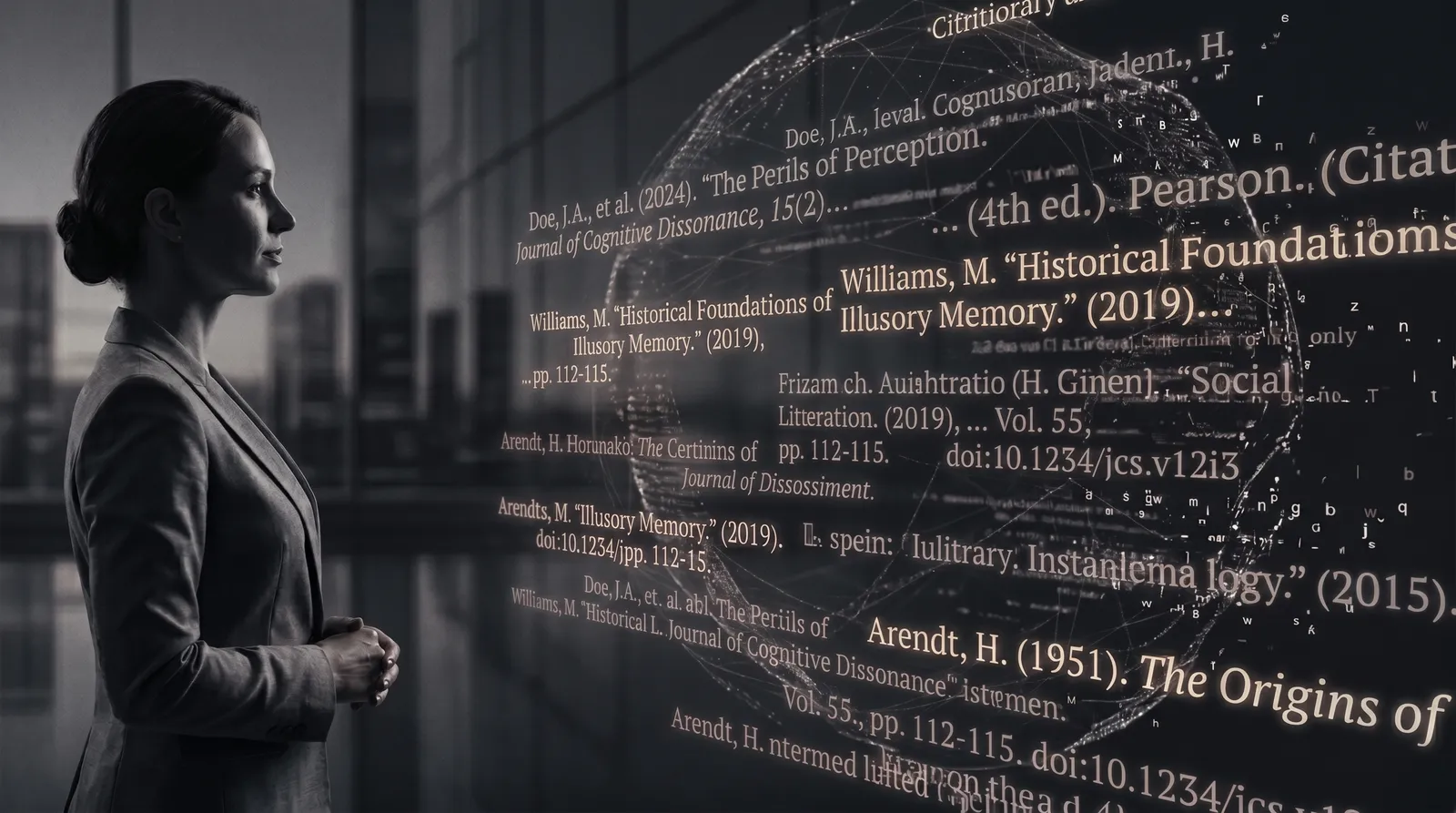
When KPMG published an AI-generated report last year with 40 fabricated citations out of 45, every citation looked internally consistent with the claims around it. No one checked the citations against the original sources before the report shipped. The firm's review process had not caught it.
The same failure mode applies when an AI agent marks client documents as prescreened and acceptable. The label is consistent. It may not be correct.
Nexairi Dispatch
Get the next AI move before it turns into a workflow problem.
Join the free newsletter for concise AI news, practical checklists, and the decisions practitioners need to make next.
Free. No spam. Unsubscribe anytime.
What Should Firms Do Before Enabling the Agents?
One written checkpoint covers the control gap: a named person reviews AI agent outputs before work proceeds to the next automated stage.
That review does not have to be a full re-examination. It can be a 5-minute check that prescreened files match what the engagement actually needs and that nothing was flagged as acceptable when it should have been rejected.
A checkpoint like that creates an evidence trail. It shows that a human reviewed the AI's output before the next stage ran. The trail matters if a client asks how a number got into a workpaper, or if a regulator asks how AI was supervised in an engagement.
GenAI use in accounting firms grew from 8% in 2024 to 40% in 2026, according to the Thomson Reuters Institute. The firms pulling ahead are not the fastest adopters. They are the ones that built real governance workflows around their tools before they scaled. A written checkpoint between AI steps is the starting point for that kind of governance.
The checkpoint does not slow the work down. It makes everything else defensible.
What Accounting Firms Should Watch Next
Suralink is positioning itself as the AI operating layer for the full audit engagement, from first document to final deliverable.
Its three launches in 90 days signal a platform strategy, not a feature roadmap. The company is building the place where client data enters, gets tested and becomes workpapers that exit as a signed report. AI handles the mechanical steps at each stage.
That is a real capability and a defensible competitive position. The Claude and Copilot integrations extend it into tools accounting professionals already rely on. Watch for other accounting platforms to respond with their own integrations in the second half of 2026.
The adoption decision is one every firm makes for itself based on workflow fit, pricing and client mix. But governance around the platform is not optional once the agents are running. The Rework Cycle wastes hours that firms cannot bill. Suralink built something serious to address that. The control environment inside the platform is still yours to design.
That answer should exist before the demo call ends.
Sources
Related Articles on Nexairi
Free Assessment
Is your firm ready for AI?
A 5-minute governance check for CPA firms using ChatGPT, Copilot or AI accounting software. Get your score and your top gaps — free.
Jim Smart is the founder and editor in chief of Nexairi. A Business Intelligence Developer with experience building data systems for Verizon, U.S. Army operations, and enterprise finance teams, Jim spent years turning complex data into decisions that executives could act on — dashboards, forecasting models, and automation pipelines across telecom and government contracting. He founded Nexairi to apply that same clarity to AI: making emerging technology understandable and actionable for the operators, accountants, and business owners who need it most. Jim holds GenAI certifications from the University of South Florida Bellini College of AI and completed Springboard's Data Science Career Track.