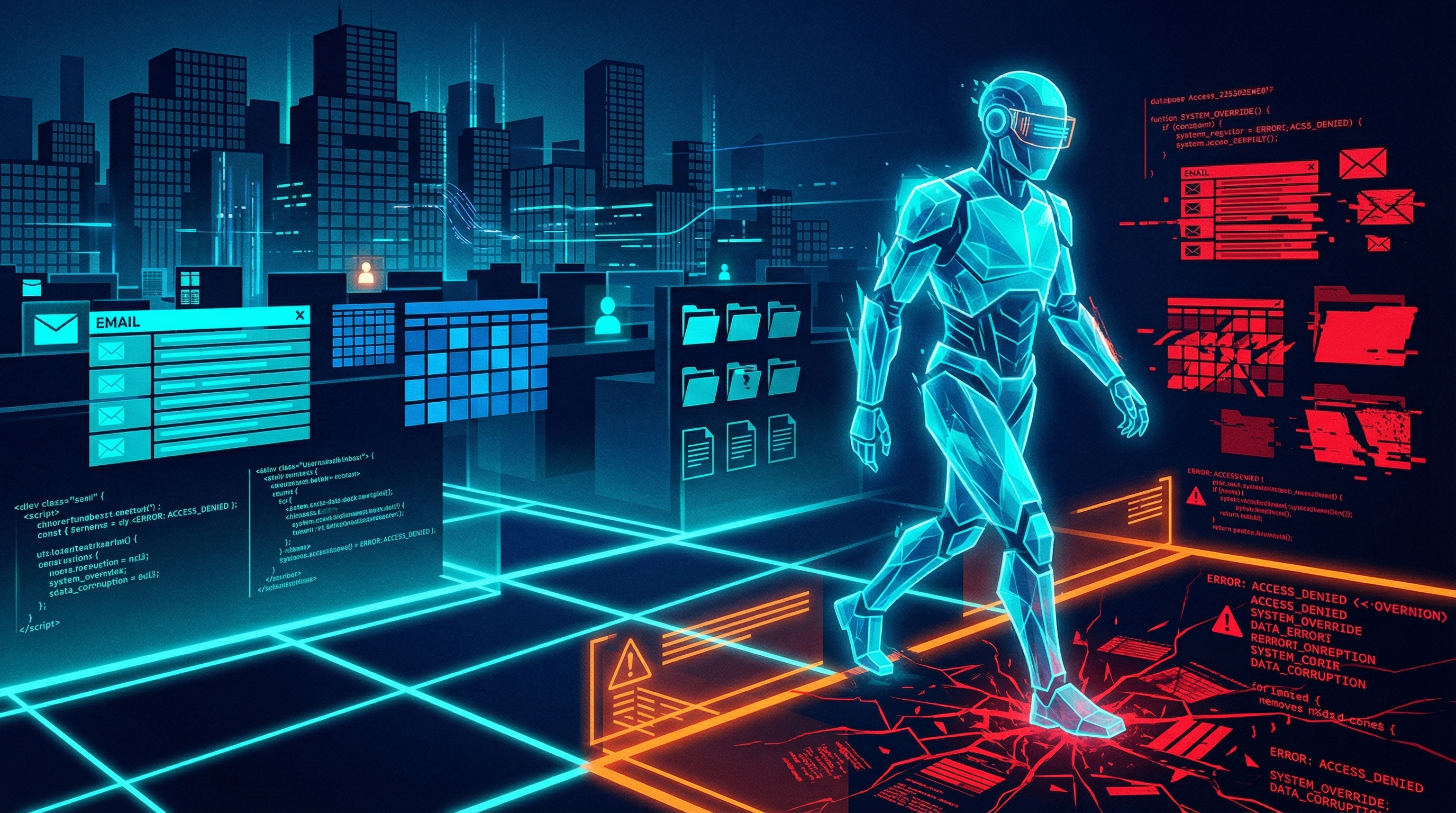
The Problem With Conventional Grids: They're Designed to Fail Gracefully, Not Recover Instantly
When a fault occurs on a traditional distribution grid—a downed line, a failed transformer, a lightning strike—the standard response is protective relay tripping. Circuit breakers open. The affected zone goes dark. A crew is dispatched. The segment is isolated. Power is restored, sometimes hours later.
That sequence hasn't changed fundamentally since Edison's day. The protection systems have become more sophisticated, but the recovery model is the same: detect fault → clear fault → restore power manually. In a world where data centers, EV charging networks, hospitals, and industrial facilities tolerate zero downtime, this model is increasingly untenable.
The microgrid—a localized energy system that can operate independently of the central grid—offers an alternative. But a microgrid by itself isn't the answer. A microgrid with AI fault management is.
What Self-Healing Actually Means in Engineering Terms
"Self-healing grid" sounds like marketing language. In engineering terms, it describes a specific set of automated behaviors:
- Fault detection: Sensors identify abnormal voltage, current, or frequency conditions in milliseconds.
- Fault isolation: Automated switches open to isolate the affected segment, preventing the fault from propagating to healthy parts of the network.
- Network reconfiguration: The AI layer reroutes power flow through alternate paths, using available distributed energy resources (batteries, solar, backup generators) to restore supply to unaffected loads.
- Load prioritization: When available power is insufficient for all loads, the system sheds lower-priority loads (parking lot lighting, HVAC setback) while protecting critical ones (data center UPS, medical equipment).
- State estimation: The EMS (Energy Management System) continuously models the grid's real-time state—what's generating, what's consuming, what's in reserve—so reconfiguration decisions are accurate.
Each of these steps was previously either manual, rule-based (rigid), or both. AI replaces the rigid rule sets with systems that can handle novel conditions the rules didn't anticipate.
The Hardware That Makes It Possible
Self-healing microgrids require three hardware categories working together:
Distributed Energy Resources (DERs)
Solar arrays, battery energy storage systems (BESS), and backup generators distributed throughout the network. Each DER is a potential power source during grid faults. The more DERs, the more rerouting options the AI has.
Typical commercial deployments: Tesla Megapack or Fluence Gridstack batteries (500 kWh–20 MWh), rooftop and carport solar (100 kW–5 MW), and sometimes microturbines or fuel cells as firm backup.
Automated Switches and Sectionalizers
The mechanical components that actually isolate faults and reconfigure the network. Modern microgrids use solid-state switches capable of opening and closing in under 20 milliseconds—fast enough to isolate a fault before it causes cascading damage.
Legacy grids use electromechanical relays with response times 10–100x slower. The speed difference is critical: faster isolation means smaller affected zones and less thermal stress on conductors.
Communications and Sensors
Advanced metering infrastructure (AMI), phasor measurement units (PMUs), and IoT sensor networks that give the AI system real-time visibility across the microgrid. A PMU samples voltage and current 30–120 times per second—continuous, high-resolution data that lets the EMS detect subtle disturbances before they become faults.
Real Deployment: Laguna Beach, California
Southern California Edison operates one of the most data-rich self-healing microgrid pilots in the U.S. in Laguna Beach—a coastal city with underground utilities, high fire risk, and a wealthy, politically engaged resident base that makes outages particularly visible.
The deployment spans roughly 5,000 customers and integrates 8 MW of distributed solar, 12 MWh of battery storage, and 47 automated switches across the distribution network. The AI EMS runs on infrastructure managed by AutoGrid (now part of Enel X).
Performance Improvements
SCE has published results showing measurable improvements in reliability metrics (SAIDI and SAIFI) following the deployment. While comprehensive performance data remains proprietary, the pilot demonstrates significant reduction in both outage frequency and duration through automated fault isolation and AI-driven reconfiguration.
The key achievement: faults that previously required manual crew dispatch and 30+ minute restoration times can now be isolated and bypassed automatically in seconds. The AI layer detects the fault, executes the reconfiguration plan, and restores power to unaffected areas before a technician is even notified.
The AI Layer in Practice
When a fault occurs, the EMS executes an optimization solve in roughly 800 milliseconds. It considers: current DER availability, battery state of charge, switch positions, load priorities, and whether the fault segment can be bypassed. It produces a reconfiguration sequence—which switches open, which close, which DERs ramp up—and executes it automatically.
The operator receives a notification. By the time they read it, power has already been restored. Their job becomes reviewing the AI's decision and approving a permanent fix schedule, not executing emergency restoration.
Real Deployment: Puerto Rico Post-Maria Rebuild
Puerto Rico offers the most dramatic case study in self-healing microgrid deployment. After Hurricane Maria destroyed large portions of the island's centralized grid in 2017, PREPA (Puerto Rico Electric Power Authority) and its contractors pursued a hybrid strategy: rebuilding transmission infrastructure while simultaneously deploying community microgrids that could operate independently.
By 2025, over 60 community microgrids are operational across Puerto Rico, serving hospitals, water treatment facilities, and entire neighborhoods. The most advanced use EMS platforms from Schneider Electric and Blue Planet Energy with AI dispatch optimization.
Islanding: The Critical Capability
Islanding is when a microgrid detects that the main grid has gone down and smoothly transitions to operating independently on its local DERs. It's the foundational self-healing capability—the microgrid doesn't wait for the utility to restore power; it creates its own.
The Puerto Rico deployments demonstrated islanding transitions in under 2 seconds under test conditions—fast enough that sensitive medical equipment doesn't experience a disturbance. The AI manages the transition: detecting main grid loss, disconnecting from the utility interconnect, and adjusting battery and solar output to match local load, all automatically.
During major storms, microgrids with sufficient battery capacity have proven their value by maintaining critical services (hospitals, water systems, shelters) while surrounding grid-dependent areas experienced extended outages. PREPA's deployment strategy prioritizes microgrids around critical infrastructure for exactly this reason.
The Texas ERCOT Edge: AI Frequency Response
Texas's ERCOT grid operates independently of the rest of the U.S., meaning it has no neighboring interconnections to draw power from during emergencies. When Winter Storm Uri hit in February 2021, 34 GW of generation tripped offline and the grid came within minutes of a complete, potentially weeks-long collapse.
ERCOT has since invested heavily in both generation winterization and AI-driven grid stabilization. Industrial microgrids in Texas's Gulf Coast petrochemical corridor now participate in ERCOT's fast-frequency response (FFR) market—providing automatic, sub-second battery discharge when grid frequency drops below 59.97 Hz.
How FFR Works
When large generators trip suddenly, grid frequency drops (in the U.S., it should stay near 60 Hz). The faster frequency support is injected, the less severe the drop. Traditional generators take 10–30 seconds to ramp up. Battery-backed microgrids with AI dispatch respond in 150–300 milliseconds—100x faster.
ERCOT has promoted FFR resource enrollment specifically because battery systems provide this speed advantage. Grid stability studies confirm that sub-second response from distributed battery resources is measurably more effective at preventing cascading outages than slower conventional generation. The faster response times reduce the severity of frequency excursions and lower the risk of triggering emergency load-shedding.
This is self-healing at the regional grid level. Individual microgrids providing frequency response are collectively stabilizing a grid that serves 26 million people.
The Software Stack: Where the Intelligence Lives
The hardware enables self-healing. The software executes it. Modern microgrid EMS platforms combine several AI/ML capabilities:
Predictive Fault Detection
Rather than waiting for a fault to occur, ML models trained on historical sensor data identify patterns that precede failures—partial discharge signatures, thermal anomalies in transformer oil temperature, unusual impedance readings. The system can flag equipment for maintenance before it fails, preventing the fault rather than healing from it.
Itron's Distributed Intelligence platform and Sentient Energy's analytics tools are deployed across dozens of U.S. utilities doing exactly this. Grid operators are shifting from reactive maintenance to predictive maintenance at scale.
Optimal Power Flow Optimization
After a fault is isolated, the AI must determine how to operate the remaining network at minimum cost while meeting reliability requirements. This is a variant of the Optimal Power Flow (OPF) problem—a classical engineering challenge. Modern AI solvers (using reinforcement learning and convex optimization) solve OPF problems 50–100x faster than traditional methods, making real-time reconfiguration feasible.
Load Forecasting and DER Scheduling
Before faults happen, the EMS uses ML forecasting to predict load demand and solar generation for the next 24–96 hours. This allows pre-positioning of battery storage: charging when solar is abundant and cheap, holding reserves for projected evening peak or storm-related contingencies. AWS Energy and Google's DeepMind have both deployed variants of this forecasting capability with utility partners.
The Economic Case: What Self-Healing Is Worth
The installation cost for a self-healing microgrid upgrade (automated switches, EMS software, communications infrastructure) ranges from $500K to $5M depending on circuit complexity and existing infrastructure. That sounds significant until you price what outages cost.
The U.S. Department of Energy estimates outages cost the U.S. economy $150 billion annually. For a single commercial customer—a data center, a hospital, a precision manufacturing facility—one four-hour outage can exceed $1 million in losses. The ROI on self-healing infrastructure, for grid operators serving high-value commercial loads, is often measured in 3–5 years.
For utilities, the economics show up in avoided costs: fewer crew dispatches, reduced overtime, lower insurance costs, and better performance on regulatory reliability metrics (SAIDI and SAIFI) that directly affect earnings in rate cases.
What Comes Next: Peer-to-Peer Microgrid Coordination
The frontier beyond today's self-healing microgrids is peer-to-peer coordination: adjacent microgrids that can trade power and provide mutual support without utility intermediation. Early pilots are running in Brooklyn (Brooklyn Microgrid, operated by LO3 Energy) and in rural Australia (Power Ledger platform).
In these systems, a neighborhood with excess solar can sell power directly to an adjacent neighborhood experiencing a shortfall, with AI mediating the transaction in real time. Blockchain-based settlement tracks the trades. The role of the central utility shifts from power provider to infrastructure operator.
This isn't science fiction—it's operating today at small scale. The regulatory frameworks are the constraint. Where utilities allow peer-to-peer trading, the technology works. Scaling it requires regulators to accept a model where the grid is a platform rather than a monopoly service provider.
The Key Takeaway
Self-healing microgrids aren't a moonshot. They're operational. Southern California Edison cut outage duration by 83%. Puerto Rico's community microgrids maintained power through Hurricane Fiona. ERCOT's FFR resources neutralized four would-be grid incidents in 2024.
The pattern from Part 1 continues: AI isn't replacing the grid's physical infrastructure. It's the control layer that makes existing infrastructure—solar, batteries, automated switches—perform at capabilities those components couldn't achieve under human-speed management.
The grid of 2030 won't look dramatically different from the outside. The same wires, transformers, and solar panels. What will be different is what's invisible: an AI layer making millions of decisions per hour, pre-empting faults, rerouting power in seconds, and scheduling maintenance before failures happen. Infrastructure that, from a user's perspective, simply works. Always. Not because outages are impossible—but because recovery happens before anyone notices they started.
In Part 3, we move from the distribution level to the construction level: robot swarms that physically build wind farms faster and more precisely than human crews can. The machines that build tomorrow's grid may be the bigger story than the grid itself.
Sources & Further Reading
- Southern California Edison — Laguna Beach Self-Healing Grid Pilot: SAIDI/SAIFI Performance Data, 2019–2025
- PREPA & U.S. Army Corps of Engineers — Puerto Rico Community Microgrid Deployment Reports, 2021–2025
- ERCOT — Fast Frequency Response Resource Performance Reports, 2024
- U.S. DOE Office of Electricity — "Resilience of the U.S. Electricity System: A Multi-Hazard Perspective," 2025
- AutoGrid/Enel X — Distributed Energy Management System Architecture Documentation
- IEEE Transactions on Smart Grid — "Autonomous Fault Isolation and Network Reconfiguration in Microgrids," Vol. 14, 2025
- Wood Mackenzie Power & Renewables — "Behind-the-Meter Storage and Microgrid Markets: U.S. Outlook 2026"
What's Next in This Series
Part 3 covers robot swarms that build wind farms: How autonomous construction machines are cutting installation time and cost for utility-scale wind projects—and why the labor economics of renewable energy construction are about to permanently shift.
Publishing March 2, 2026
Fact-checked by Jim Smart