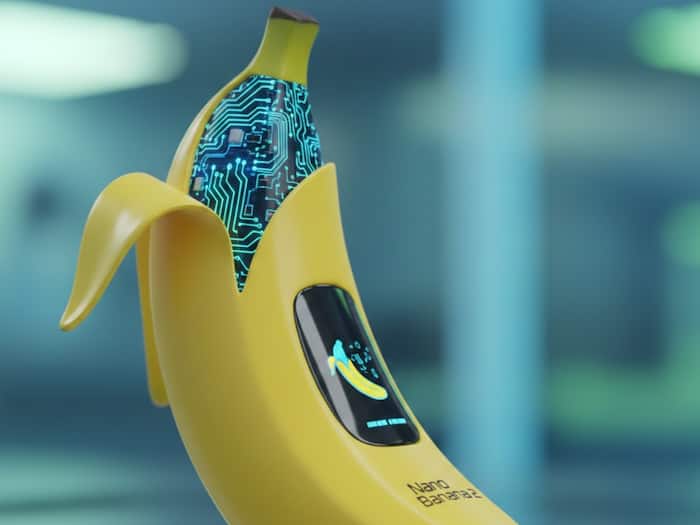
We designed computers to function as logical machines. However, to create true artificial intelligence (AI), we may need to model them after biological systems. And that's exactly what neuromorphic computing does.
The challenge with current AI lies in its insatiable appetite for energy. Training a model like GPT-4 requires enough electricity to power a small town. In contrast, our brains operate on approximately 20 watts of power—equivalent to that of a dim lightbulb. Yet, our brains can simultaneously drive a car, write a novel and navigate complex social interactions.
The disparity between "Silicon Efficiency" and "Biological Efficiency" is significant. Bridging this gap is the objective of Neuromorphic Computing—a paradigm shift in how we build intelligence into machines.
What is a Neuromorphic Chip?
Traditional computers utilize the Von Neumann architecture, where memory and processing units are separate. This separation necessitates data to shuttle back and forth, resulting in substantial energy loss and latency.
Neuromorphic chips, such as Intel's Loihi, IBM's TrueNorth, and Braincells Inc's chips, are designed to mimic neurons and synapses directly. They integrate memory and processing in a single location and communicate through "spikes" (pulses of electricity), similar to how brain cells communicate. When idle, they consume essentially zero power. When active, they consume a fraction of what traditional processors require for equivalent tasks.
This spiking-based approach means the chip only processes information when there's a change to act upon—a phenomenon called "event-driven computing." Unlike the continuous clock ticks of CPUs and GPUs, neuromorphic systems are asynchronous and responsive.
The Energy Efficiency Advantage
Neuromorphic chips achieve what traditional AI cannot: Sub-milliwatt processing. Intel's Loihi-2 performs complex pattern recognition at 50-100x lower power than GPUs on equivalent tasks.
This efficiency unlocks new use cases:
- Wearables: AI running on wristbands or glasses without draining batteries daily.
- IoT at Scale: Billions of edge devices performing intelligence locally without cloud connectivity.
- Autonomous Systems: Drones and robots that can operate for hours on small batteries.
Why It Matters Now
We are encountering fundamental limitations with traditional AI. Expanding data centers is not a sustainable solution—the power costs and environmental footprint are untenable. We require Edge AI—intelligence that operates on devices like phones, cars, or drones without relying on cloud connectivity.
Neuromorphic chips excel in:
- Sensory Processing: Detecting chemicals, feeling textures, observing movement—tasks requiring real-time response to streaming data.
- Real-time Learning: Recognizing a new face instantly without requiring weeks of retraining on a server farm.
- Anomaly Detection: Identifying unusual patterns in sensor data streams without storing all historical data.
- Noisy Signal Filtering: Extracting meaning from imperfect, chaotic inputs—a forte of biological brains.
Early Applications Getting Real
Neuromorphic chips already power edge devices in production. A European research center built a neuromorphic system that tracks seismic activity in real time while consuming a fraction of the power of traditional edge processors. Those successes prove that the chips can handle noisy, unpredictable data without constant retraining.
Real-world examples emerging in 2024-2025:
- Prosthetic Limbs: Neuromorphic chips translate muscle signals into fluid movement with minimal latency. Amputees report unprecedented natural control.
- Security Systems: Neuromorphic vision sensors track infrared anomalies in airports and data centers, consuming 1000x less power than traditional thermal cameras.
- Robotics Locomotion: Basic reflexes are handled locally by neuromorphic chips, with the GPU reserved for higher-level planning.
- Agricultural Drones: Field monitoring drones equipped with neuromorphic chips detect crop stress, irrigation needs, and pest activity while flying 48+ hours on a charge.
Roadblocks to Mainstream Adoption
Despite the promise, neuromorphic systems face significant hurdles:
- Programming Complexity: Engineers must learn to debug event-based architectures instead of clocked logic. Current programming models (Python, C++) don't translate directly to neuromorphic paradigms.
- Toolchain Immaturity: IDEs, debuggers, and simulation environments for neuromorphic development lag far behind GPU/CPU tools. Training neuromorphic models requires specialized frameworks like Brian, NEST, or Nengo.
- Hardware Fragmentation: No two vendor platforms are identical. Intel's Loihi interface differs from IBM's TrueNorth, creating vendor lock-in concerns.
- Software Stack Standardization: The industry lacks a uniform software layer. NVIDIA's CUDA and OpenCL don't apply to neuromorphic chips, leaving developers to write bespoke code.
The Hybrid Future: 2025-2030
We won't be replacing your CPU or GPU with a neuromorphic chip overnight. Your GPU remains superior for processing large spreadsheets, training transformer models, or rendering video games.
However, the computer of 2030 will likely be a hybrid system:
- A CPU for logical operations and control flow.
- A GPU for graphics processing and matrix operations.
- An NPU (Neuromorphic Processing Unit) for "intuition," sensory tasks, and real-time inference.
This hybrid approach allocates each task to the most efficient hardware. Logical operations stay on CPUs. Heavy matrix math goes to GPUs. Streaming sensory processing—the intelligence that allows your phone to understand your voice, recognize your face, and predict your next action—runs on the neuromorphic unit.
Productivity gains from this hybrid approach will be substantial. Devices will understand context and intent without constant cloud round-trips.
The Wetware Frontier
In perhaps the most mind-bending development, researchers are exploring "Wetware"—utilizing actual biological brain cells cultivated in laboratory environments to drive computer simulations. Although it's still in the early stages (protocols were published in 2023-2024), the boundary between biology and technology is blurring more rapidly than we realize.
These lab-grown neural networks have already performed simple tasks (playing Pong, responding to stimuli), proving the concept. By 2030, we may see commercial applications of biological-silicon hybrids for pattern recognition tasks beyond what any digital system can achieve.
Investment & Industry Momentum
Major tech companies are betting heavily on neuromorphic computing:
- Intel: Loihi-2 released 2023, with Loihi-3 roadmap extending to 2026.
- IBM: TrueNorth research continuing, partnership with Braincells Inc.
- ARM Holdings: Developing neuromorphic instruction sets.
- Startups: SpiNNaker, Braincells, aiCTX raising venture capital to commercialize.
The neuromorphic chip market is projected to reach $2.7B by 2030, with CAGR of 38%—far outpacing GPUs and traditional semiconductors.
The Bottom Line:
Neuromorphic computing represents a fundamental rethinking of how we build intelligence. Rather than scaling traditional computers, we're learning to think like neurons. By 2030, every smartphone, drone, and IoT device will likely incorporate neuromorphic elements—quietly handling the sensory and intuitive tasks that make AI feel natural rather than calculated.