From Copilots in Editors to Agents in the Terminal
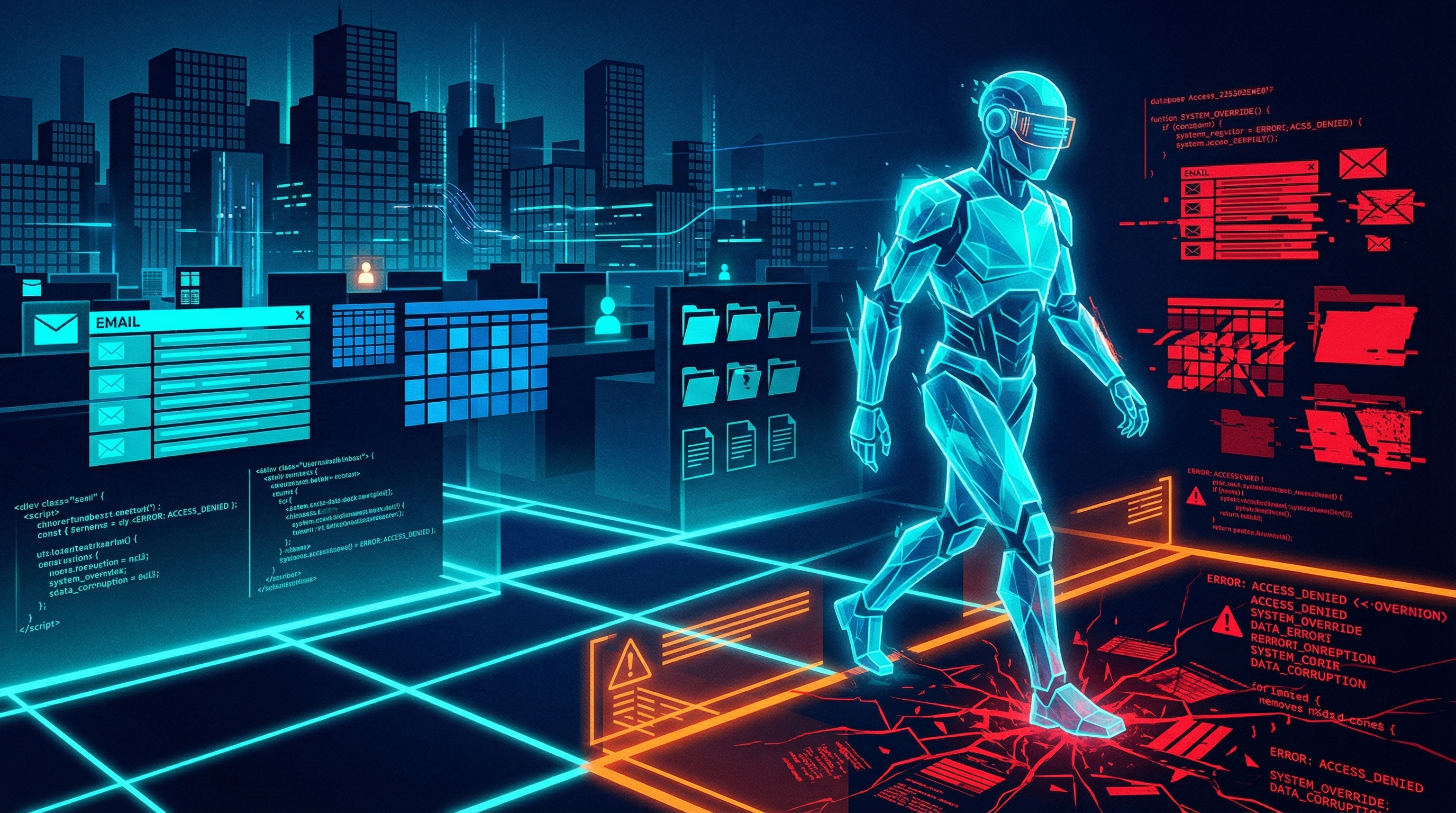
The first wave of developer AI lived inside editors: GitHub Copilot, Cursor, Claude Code and the like. Those tools were useful, but they came with trade‑offs — tight vendor coupling, opaque request routing, and interfaces that didn’t translate outside the editor.
Agentic engineering is broader: it automates multi‑step workflows (scaffolding, infra, tests, triage, deployment) that cross tools and systems. For those problems the terminal — with pipes, scripts, tmux and SSH — is the natural substrate.
Where editors excel at in‑line help and code completion, they struggle to expose the operational surface teams care about: reproducible runs, CI hooks, and low‑friction audit trails. The terminal already provides primitives for that world: text streams, exit codes, composable commands and environment variables — all essential for production automation.
Early adopter teams report that moving repetitive, well‑defined tasks into the CLI reduced cycle time for common changes by 30–50% because automation becomes part of the developer flow, not a separate runbook to follow. That operational win is why platform teams prioritize CLI ergonomics and clear command contracts.
Why Infra‑Minded Devs Live in the Terminal
Terminal workflows are predictable, scriptable, reproducible and audit‑friendly — properties that matter when teams manage risk at scale. A CLI can be run in CI, wrapped by platform tooling, invoked by agents, and audited with logs; GUIs struggle to deliver that consistency.
In practice this means platform teams can embed policy checks and non‑repudiable logs into the command layer. Because CLIs emit structured output in addition to human text, they become first‑class inputs to verification tooling and incident review systems.
Monitoring matters: capture command metadata, execution duration, and tool exit codes in your observability stack so you can correlate model invocations with downstream incidents and cost spikes. That telemetry is the basis for sensible SLOs and post‑mortems.
What Kilo CLI 1.0 Actually Is
Kilo v1.0 is a unified CLI that can address hundreds of models (OpenAI, Anthropic, and local runtimes) via a single config. It builds on an open core (OpenCode) under an MIT license and exposes modular tools agents can call: shell, HTTP, SQL, file I/O and service adapters.
- Model‑agnostic adapter layer: swap endpoints without rewriting scripts.
- Tools as primitives: agents call a bounded set of actions (plan, run, fetch, store).
- Config‑driven routing: policy, caching and telemetry live in config, not closures.
- Local runtime support: run small models on premise for IP‑sensitive tasks.
Kilo’s design reflects lessons from platform engineering: make the simple path fast, make the complex path auditable, and keep the surface area small enough to review. That’s why Kilo emits compact JSON alongside console text — the JSON includes plan IDs, invoked tool names, latency metrics and error codes so CI and observability stacks can process runs automatically.
‘Vibe Coding’ and Agent Workflows
Journalists dubbed the movement “vibe coding”: quick terminal iteration where human intent, automation and agents mix. Kilo codifies these flows into commands:
$ kilo plan --task "add user auth"
$ kilo refactor src/auth --pattern "callback"
$ kilo test --focus auth --report junit
Each command emits structured JSON alongside human text — a plan agents can ingest, verify and execute. That combination of human oversight, reproducible plans and machine execution is why teams treat agentic CLIs as infrastructure.
Developers report that the best results come from treating the CLI like a shared API: make commands idempotent, emit machine‑readable artifacts, and keep side effects explicit. When adopted this way, the CLI becomes the canonical source of automation, not a thin client over a cloud service.
Example Workflow: Idea to PR
- Sketch intent:
echo "add rate limiting" | kilo plan - Generate scaffold:
kilo generate --routing middleware - Run tests:
kilo test --smoke - Create PR:
kilo pr create --branch ai-rate-limit
Because the CLI produces machine‑readable artifacts, platform teams can implement safety gates in CI to vet plans before execution.
In larger orgs this workflow maps to a sequence of checks: linting, policy evaluation, security scanning and approval gates. Kilo’s structured outputs let teams automate those checks at scale, reducing the need for manual triage and increasing throughput.
How It Compares to Vendor‑Locked Experiences
Editor copilots offer UX polish and inline suggestions, but they often lock you to a provider. Model‑agnostic CLIs trade some polish for portability, procurement flexibility, and easier integration into platform tooling.
| Dimension | Editor Copilot | Model‑Agnostic CLI |
|---|---|---|
| UX polish | High | Terminal‑centric |
| Model portability | Low | High |
| Automation surface | Hard to CI | Designed for CI/agents |
| Procurement | Vendor contract | Flexible providers |
The practical tradeoff is simple: teams that prioritize speed to prototype may prefer editor integrations early; teams that need reproducibility, security and auditability at scale prefer CLIs and platform primitives.
Why Model‑Agnostic CLIs Matter for Teams
- Swapability: experiment with small, cheap models for routine tasks and bump to larger models where needed.
- Security & IP: run local models on private data to reduce exfiltration risk.
- Platform integration: CLIs are callable APIs for internal AI platforms, usable from laptops, CI and agent runners.
These benefits compound: portability reduces vendor negotiation overhead, and having a single surface for automation simplifies onboarding for new engineers and SREs.
This is infrastructure.
Risks and Limits
CLIs are not a silver bullet. They increase accessibility for engineers but can be opaque for non‑technical stakeholders. Governance questions remain: who reviews plans, what telemetry is retained, and how are destructive actions gated?
Address these by defaulting to least privilege, making plan artifacts human‑readable, and requiring explicit approval for destructive operations. Observability is critical — logs, traces and plan IDs must map back to the originating user and CI run.
Operationally, teams should treat plan artifacts as first‑class documents: store them with immutable IDs, surface provenance in dashboards, and tie approval workflows to identity providers. These modest operational practices eliminate many of the governance headaches people assume come with automation.
Nexairi Take: The Real ‘AI IDE’ Lives in Shell Land
Whoever standardizes the open, composable workflow — the primitives agents call, how plans are represented, and the safety rails around execution — will shape agentic engineering. Kilo’s early move matters because it aligns with platform needs: portability, auditability and policy‑first defaults.
If you run an engineering org or build an AI platform, treat the CLI as infrastructure: prototype flows behind flags, require human approval on destructive plans, and design for model swapability from day one.
Fact-checked by Jim Smart