Key Takeaways
- Personalized sports broadcasts—where AI generates custom video and commentary for each viewer—are moving from theoretical capability to production readiness in 2026–2027.
- The technology stack is ready: generative video models can create synthetic camera work, AI narration systems can generate credible commentary, and real-time coordination systems can synchronize everything at broadcast scale.
- Unlike simple filtering (picking which camera feed to watch), full AI-directed personalization requires real-time decision-making about what to film, how to frame it, and what narrative to emphasize—a fundamentally different architecture.
- This unlocks convenience at scale but introduces new privacy demands: personalization requires granular data about what each fan cares about, creating surveillance opportunities that sports leagues and platforms haven't yet addressed.
- Sports unions, leagues, and international regulators will face new questions: who owns the right to an AI-generated commentary? If the AI misrepresents a player or moment, who's liable? What happens when personalized broadcasts change the story fans see?
What Does a Personalized AI Broadcast Actually Look Like in Practice?
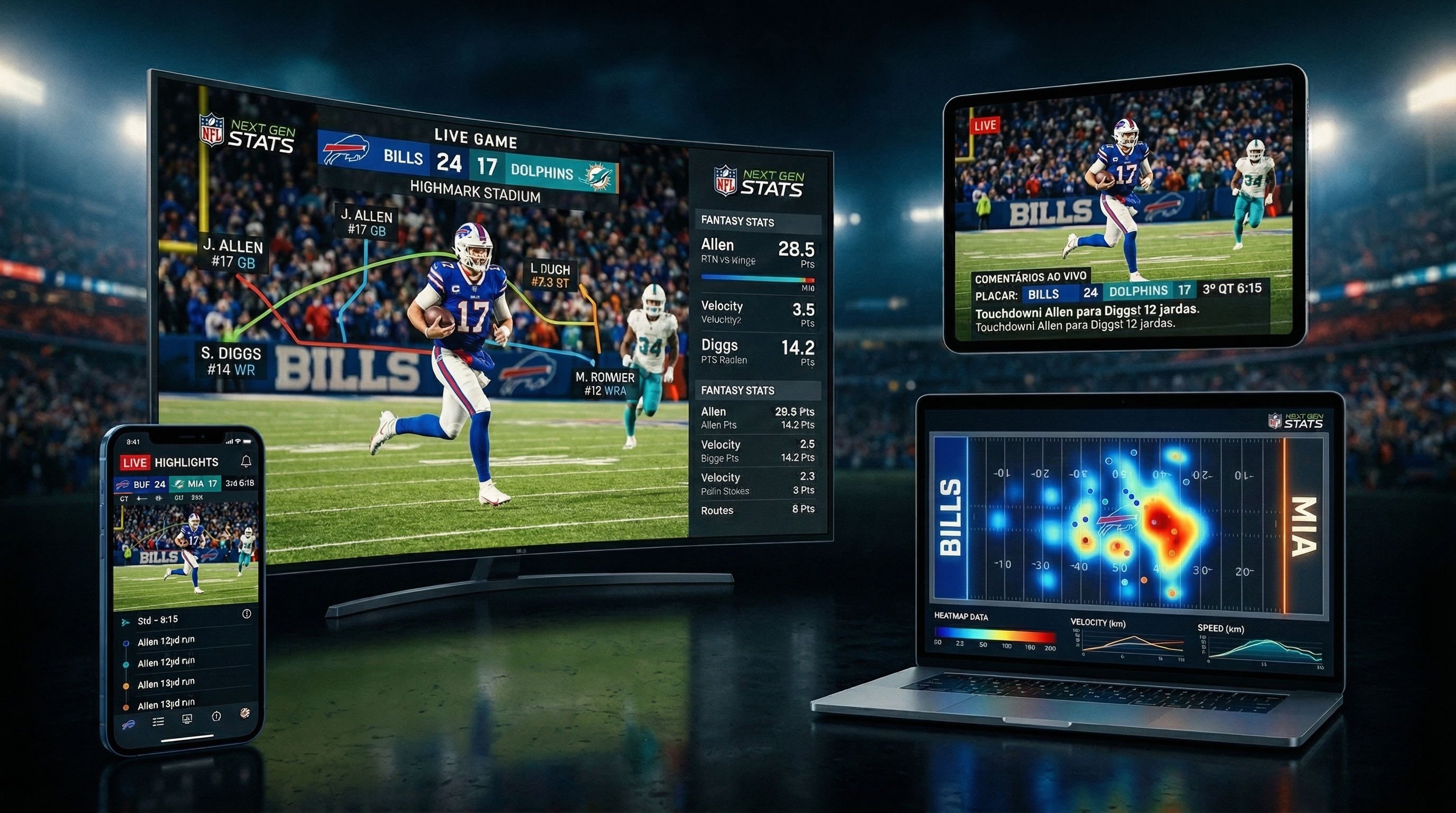
A personalized broadcast isn't just picking which camera feed to watch or muting commentary you dislike. It's fundamentally custom.
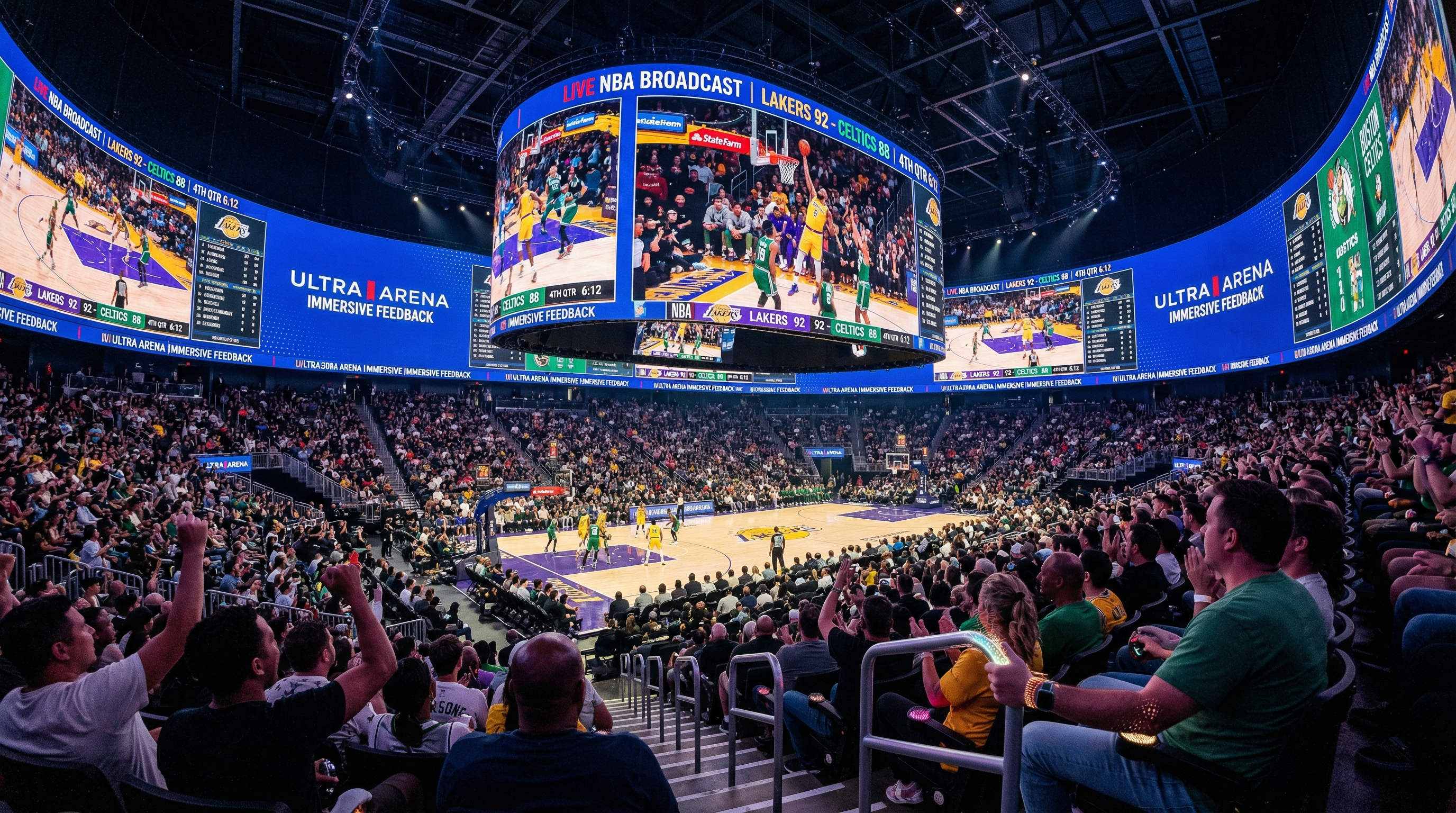
Imagine you're a Boston Celtics fan watching a game against the Los Angeles Lakers. A personalized broadcast shows you the Celtics' perspective: when the Celtics have possession, the AI camera favors their side of the court, shows replays of their plays first, and emphasizes their strengths. AI-generated commentary explains their strategy and highlights their execution. When the Lakers score, the broadcast shows the play, but the narrative focus is different: "Here's what Boston's defense needs to adjust."
Or imagine you're a stats-focused viewer. Your broadcast is built around the numbers: possessions per minute, efficiency differential, fourth-quarter execution metrics. The AI pulls up graphics automatically when relevant stats shift. Commentary ties every play to the underlying statistical story.
Or you're a neutral fan interested in player trajectories. Your broadcast follows your watched list of players: when any of them are on screen, the AI emphasizes their performance. When they're off screen, you see less. The narrative is about individual arcs, not team dynamics.
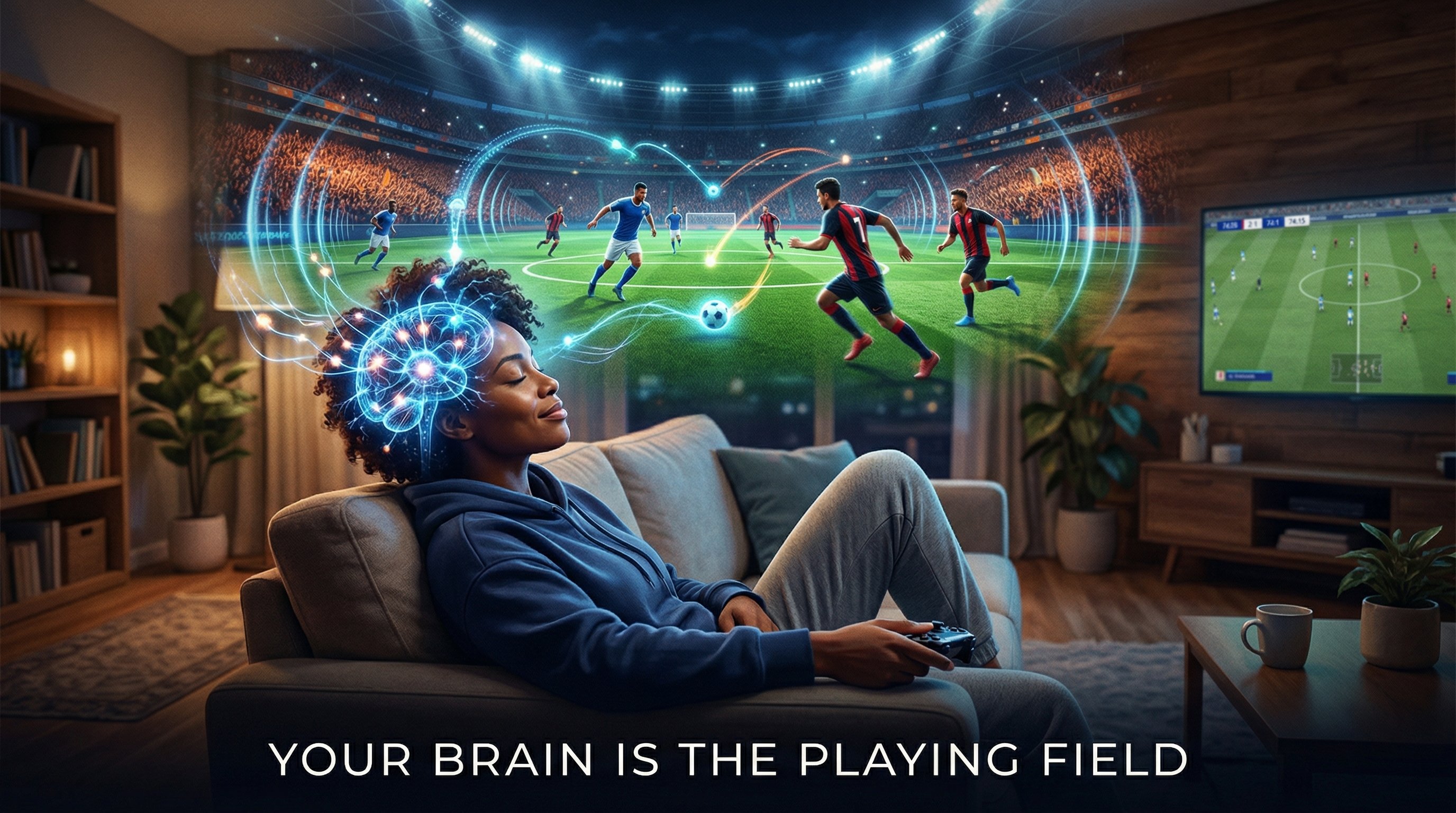
Each of these is a different broadcast. Same game. Same raw video. Completely different viewing experience. That's what "personalized AI broadcast" means technically.
How Would an AI Director Choose What to Film and Narrate?
AI-directed personalization requires real-time decisions about camera direction, replay selection, and commentary focus—three layers of customization.
Layer 1: Camera Direction. Current sports broadcasts use 10–30 fixed cameras placed around the stadium. A human director watches monitors and decides what to show: close-up on the player with the ball, wide shot of the court, overhead view for tactics, close-up on the bench for reaction. An AI director makes these decisions based on viewer preference. A Celtics fan's broadcast keeps the camera close to Boston's players more often. A stats-focused broadcast uses overhead angles more frequently to show spacing and positioning. The AI has been trained on millions of professional broadcast decisions to predict what angle serves each viewing preference best.
Layer 2: Replay Selection. After a significant play (basket, turnover, defensive stop), broadcasts show replays. Which angle? How many times? An AI system trained on viewing preference data knows that Celtics fans want to see replays of Celtics plays more often, while Lakers fans prioritize Lakers replays. A neutral viewer might want replays of exceptional plays regardless of team. The AI chooses which replays to feature and in what order.
Layer 3: Commentary. Here's where generative AI becomes essential. A human commentator can't record personalized takes for millions of viewers. But an AI system can. Given a play, viewer preference profile, and real-time game state, an AI voice can generate commentary that emphasizes the relevant narrative: "Boston's spacing is excellent on this possession" (for a Boston fan) vs. "Here's where the Lakers' defense broke down" (for a Lakers fan). The same play, different story.
None of these layers exists in isolation. They coordinate. When the AI chooses to emphasize a particular player or team, the camera direction, replay selection, and commentary all reinforce that choice. The result is a coherent, personalized broadcast experience.
What's the Difference Between Filtering and Full Customization?
Sports streaming platforms already offer filtering: choose which teams to follow, mute commentators, select camera angles. Is personalized AI broadcast just advanced filtering?
No. Filtering is passive. The broadcast is created once, and you select which version to watch. Personalized AI broadcast is active. The broadcast is created in real-time for you.
Here's the practical difference. A filter says: "Show me the Celtics-focused broadcast." A platform with pre-recorded filtered broadcasts can do this, but it requires producing multiple versions (Celtics-focused, Lakers-focused, neutral, stats-focused, etc.). You're limited to the pre-produced options.
A personalized AI broadcast says: "Create a broadcast for me based on my specific preferences right now." The AI can incorporate live changes to your preferences, combine preferences in ways not pre-produced (e.g., "I care about this specific player and these specific statistics"), and adapt as your interests shift during the game. It's genuinely dynamic, not just selection from pre-made options.
The computational cost is higher, but the personalization depth is qualitatively different. That's why it requires real-time AI systems, not just filtering infrastructure.
Why Hasn't This Happened Yet, and Why Is It Happening Now?
Personalized AI broadcast has been theoretically possible for five years. Why wasn't it already deployed?
Three blockers, all recently removed: (1) generative video quality was too poor, (2) AI commentary systems were embarrassingly bad, (3) real-time coordination was computationally expensive.
In 2022–2023, generative video models couldn't produce broadcast-quality output. Sora, Runway, and similar systems have improved dramatically. By late 2025–early 2026, video quality is approaching production-ready for sports (which is actually easier than general-use generative video because sports have predictable camera angles and limited visual variability).
Similarly, AI voice synthesis for sports commentary was robotic and unconvincing. Modern text-to-speech and generative voice models have improved enough that AI commentary in a sports context is now credible to casual listeners. Not perfect, but acceptable.
Third, coordinating real-time personalization at scale was computationally prohibitive. Cloud video processing has gotten cheaper, and edge processing has gotten smarter. The economics now work.
The inflection point is 2026–2027. The first producer to implement personalized AI broadcast will likely be a premium streaming service (ESPN+, Apple TV+, or a new entrant) offering it as a differentiated feature. Others will follow quickly.
What Data Does Personalization Require, and Who Owns It?
Personalization requires understanding what each viewer cares about. That data comes from three sources: explicit preference (you tell the system), implicit data (your viewing history), and behavioral signals (how you interact with broadcasts).
Explicit preference is straightforward: "I follow the Celtics," "Show me stats," "I'm interested in this player." You control it.
Implicit data is darker. Your viewing history (which teams you watch more, which commentators you rewatch, which stats you pause on) reveals preferences whether you state them or not. Sports platforms already collect this data. Personalized AI broadcast just makes it directly actionable.
Behavioral signals are the edge case. How long do you watch replays? Do you fast-forward through certain types of plays? Do you switch streams during specific moments? This data tells the system what you find engaging, even if you never state it explicitly. Sports platforms don't yet collect this granularly, but they could with personalized broadcast infrastructure.
Here's the ownership problem: sports platforms (ESPN+, Apple TV+) will argue they own this data because they're the intermediary collecting it. Players will argue their likenesses and performances are being used to generate content without compensation. Viewers will argue their behavior shouldn't be tracked so granularly. Regulators like the FTC (and internationally, the GDPR and IAPP) will likely intervene once personalized broadcast deployments become visible to media coverage.
How Will Sports Leagues Respond, and Who Gets Paid?
Leagues have two competing incentives: capture more personalization revenue (premium pricing for personalized broadcasts), and control the representation of their sport and players.
The revenue opportunity is real. If 30% of viewers upgrade to personalized broadcasts at a 50% price premium, that's a meaningful revenue increase for platforms paying league rights fees. Leagues want a cut. Platforms want the feature to be exclusive or at least differentiated.
The control problem is newer. If an AI system generates commentary about a player, and it's factually wrong or misleading, who's responsible? If a personalized broadcast systematically misrepresents a team's strategy to viewers, is that fraud? These questions don't have legal precedent.
Player unions will demand compensation. If AI generates a synthesized voice that sounds like a retired commentator to provide personalized narration, does that commentator get paid? If AI creates virtual representations of plays (which generative video enables), is that a "performance" requiring compensation like traditional broadcasting?
The most likely outcome: leagues establish approval processes for AI-generated commentary content, players negotiate opt-in/opt-out terms, and platforms pay incremental licensing fees to leagues. It'll be messy and litigious for 2–3 years.
What This Means for Fan Culture and Sports Identity
Personalized sports broadcasts might seem purely convenience-driven. But they reshape what "watching the game" means culturally.
Currently, most fans watch the same broadcast. Regional broadcasts mean Celtics fans and Lakers fans see different commentary, but the camera work and replays are usually the same. There's a shared experience of the game, even if perspectives differ.
Personalized broadcasts fragment that shared experience. Each viewer sees a slightly different game. Over time, this could create tribal separation: fans literally seeing different narratives of the same events. When leagues inevitably show a highlight reel or coach's film on social media, and it contradicts what a personalized broadcast showed you, trust erodes.
There's also a wealth angle. Personalized broadcasts will command a premium. Casual fans without the premium tier see the standard broadcast. Committed fans who pay see the personalized experience. Sports have always had tiers of access, but this is a tier applied to the fundamental experience of watching the game itself.
Finally, there's the fandom question: is your relationship to a team weakened if your broadcast is curated to maximize your satisfaction rather than representing the reality of the game? If the AI prioritizes showing your team's good plays and downplays their struggles, are you still a "fan" or just a consumer of personalized content? The philosophical question matters less than the business incentive: platforms will discover that personalizing toward confirmation bias drives engagement, and they'll lean into it.
What Does Personal Broadcast Mean for the Future of Sports Viewing?
Personalized AI broadcast is an inflection point, not an endpoint. Once platforms deploy it, the technology evolves quickly.
Year 1 (2026–2027): Beta deployments. Premium feature. Limited personalization (team/player preference, basic narrative focus). User data collection accelerates.
Year 2–3 (2028–2029): Mainstream adoption. Major sports embrace it. Personalization depth increases: AI learns not just what team you follow, but what style of play you prefer, which players you enjoy watching together, which commentary style resonates. You're no longer just watching "Celtics vs Lakers." You're watching "Celtics vs Lakers optimized for mid-range shot analysis" or "optimized for defensive intensity," or "optimized for player trajectory narratives." Entirely different broadcasts.
Year 4+ (2030+): Fragmentation and regulation. By then, privacy regulators will likely have intervened. Data collection will be restricted. Some personalization features will be banned in certain jurisdictions. Alternative business models will emerge (paid personalization tier, ad-supported personalization, league-controlled personalization).
The key unknown: will AI-generated sports broadcasts ever feel as credible and emotionally resonant as human-directed broadcasts? That's a question viewers will answer with their engagement metrics. If the answer is no, personalized broadcast becomes a niche premium feature. If the answer is yes, it becomes the default, and traditional broadcast becomes the anachronism.
Sources
Related Articles on Nexairi
Fact-checked by Jim Smart