Key Takeaways
- NFL, NBA, and MLB have deliberately fragmented broadcast rights across Apple TV+, Amazon Prime Video, ESPN, traditional TV networks, and regional platforms instead of consolidating into single broadcasters
- Apple pays $2.5 billion per year for NFL Sunday Ticket (2023–2033), while Amazon pays roughly $1 billion annually for Thursday Night Football—exclusive streaming windows that generate record licensing fees
- A casual sports fan now needs 4–6 active subscriptions to follow a single team across a full season, driving what analysts call "subscription fatigue" and creating pressure on bundling models
- The 2026–2030 rights cycles for NFL, NBA, and MLB will determine whether fragmentation continues (maximizing revenue) or whether leagues consolidate power back into bundled offerings (maximizing viewership)
- Streaming now represents 28% of MLB viewership and growing fast in NBA and NFL—but no single platform exceeds 15% of league-wide viewership, keeping rights permanently fractured
How Did Sports Broadcasting Rights Become So Fragmented?
Leagues split rights across competing platforms to drive up licensing fees. When no single broadcaster owns everything, each bids to exclude others, raising per-game costs dramatically.
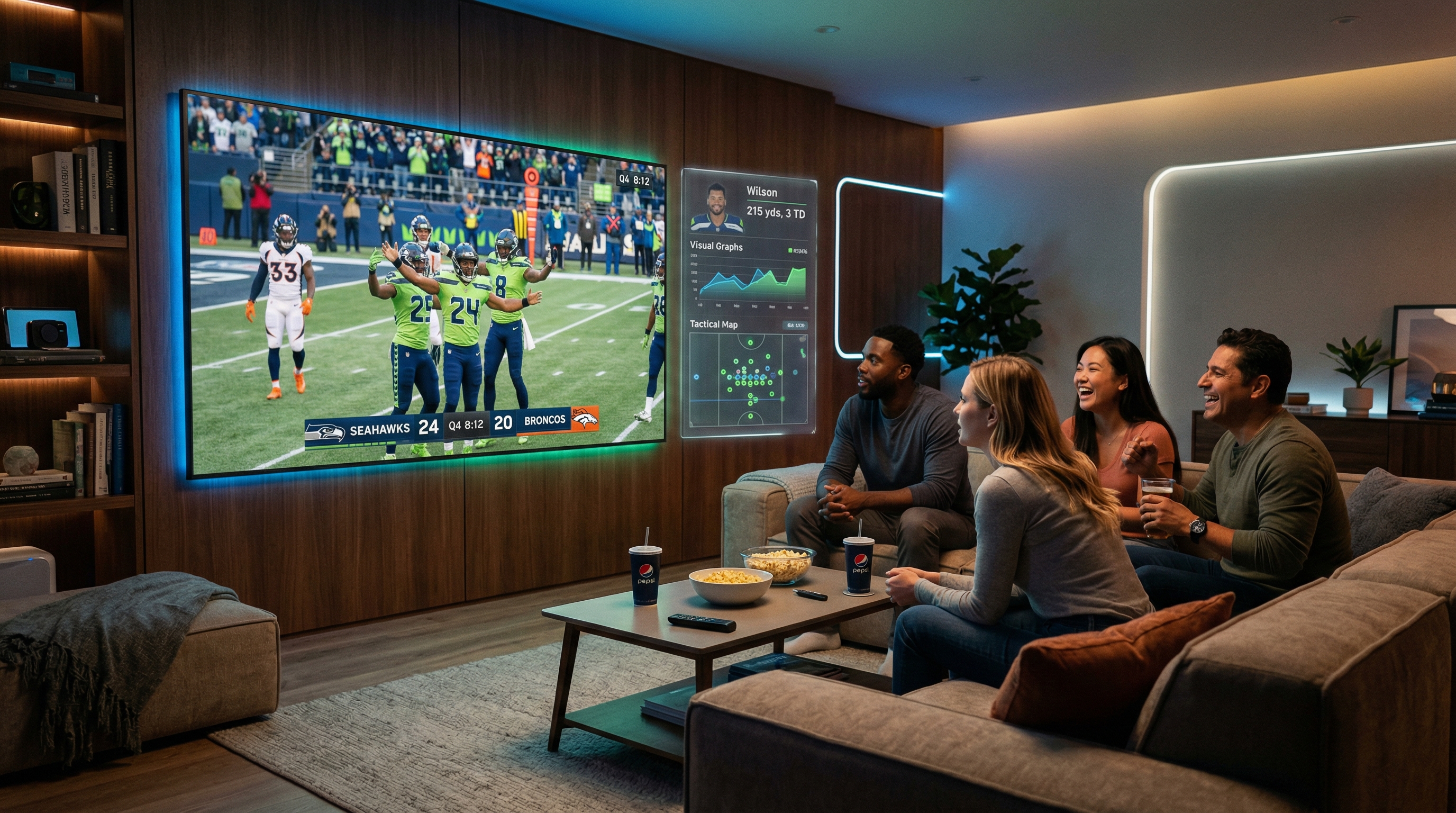
Three years ago, you could watch nearly every NFL, NBA, or MLB game through one cable package. Now? That option is dead. Want to watch the Lakers across a season? You're hunting across ESPN+ (regular season), ABC or TNT+ (primetime), and possibly Amazon Prime Video for random exclusive games. For the NFL, add Apple TV+ (Sunday Ticket) and Amazon Prime (Thursday nights) to your stack. One broadcaster used to own everything. Now no single platform has it all.
This isn't an accident. It's the entire strategy. Leagues realized that splitting rights across competing platforms drives each bidder crazy—if you can't buy the whole league, you'll overpay for exclusivity. Apple paid $2.5 billion annually just for Sunday Ticket, beating what DirecTV ever paid for the same package in the satellite era. Amazon is spending roughly $1 billion a year for Thursday Night Football alone. A single-game window that generated nothing 10 years ago is now a billion-dollar asset. That's what fragmentation does.
Why is sports streaming so fragmented in 2026?
Competing platforms bid premium fees for exclusive windows. Each broadcaster overpays because it can't buy full league rights, driving licensing costs up across the board.
Fragmentation is revenue genius for leagues. When ABC, NBC, CBS, ESPN, Apple, Amazon, and regional carriers all bid for different pieces, they bid against each other. A league tells Apple ''we've got premium Sunday games'' and tells Amazon ''we've got exclusive Thursday windows.'' Neither gets enough to dominate, so both keep raising their bids to stay in the game. That competitive desperation is the whole point. The NFL, NBA, and MLB figured this out during the 2020–2023 renewal cycles and built fragmentation into their 2025–2030 strategy on purpose.
The Revenue-Fragmentation Trade-off
Leagues are choosing revenue maximization over fan experience. Fragmentation creates friction—fans need multiple subscriptions, spend more time searching for where games air, and often resort to illegal streaming to avoid the sign-up burden. However, fragmentation also generates 15–25% higher per-window rights fees than consolidated deals did during the 2010–2020 era. For league owners and executives, the choice is simple: $50 billion total revenue spread across five broadcasters beats $38 billion from a single monopoly broadcaster. Fans absorb the cost.
What Do Modern Sports Rights Deals Actually Cost?
Apple pays $2.5 billion yearly for NFL Sunday Ticket. Amazon pays roughly $1 billion for Thursday Night Football. Per-game rights fees have tripled in a decade.
Sports broadcasting rights are now the most expensive media contracts on Earth. Here's the actual spending:
| League/Sport | Rights Holder | Annual Cost (est.) | Window/Type | Start Date |
|---|---|---|---|---|
| NFL | Apple TV+ | $2.5B | Sunday Ticket (all out-of-market games) | 2023 |
| NFL | Amazon Prime Video | ~$1.0B | Thursday Night Football (exclusive) | 2023 |
| NFL | ESPN (linear + Disney+) | $2.1B | Monday Night Football | Ongoing |
| NBA | ESPN | $2.5B | 2025–26 cycle | 2025 |
| NBA | Warner Bros. Discovery | $2.5B | NBA on TNT (primetime) | 2025 |
| NBA | Amazon Prime Video | $500M–$1B | Wed/Thu primetime exclusive games | 2025 |
| MLB | Apple TV+ | ~$180M | Friday Night Baseball (~400 games/season) | 2024 |
| MLB | Peacock (NBC/Comcast) | ~$190M | Thursday Night Baseball | 2024 |
| Premier League (UK) | Sky Sports | ~£2.0B/year | 200 games/season | 2024–2028 |
| Premier League (UK) | Amazon Prime Video | ~£0.5B/year | Friday + Cup matches | 2024–2028 |
These numbers reveal a stark reality: streaming platforms are now the primary bidders for exclusive sports windows. Apple's $2.5 billion annual commitment to NFL Sunday Ticket—an ex-satellite exclusive that DirecTV held for 16 years—reflects how much premium sports content is worth in the streaming era. The shift from linear monopolies to platform-specific exclusives has turbocharged licensing fees across the board.
Why do fans hate the multi-service model?
Serious fans need four to six subscriptions ($180-$280 monthly) for one team's full season. Streaming promised cheaper than cable. Fragmentation made it worse.
Do the math. A serious sports fan now juggling 4–6 active subscriptions just to follow one team across a season. ESPN+, Apple TV+, Amazon Prime Video, traditional cable (still!), regional sports networks, and sometimes league-specific apps like NBA League Pass or MLB.tv. It's insane.
The annual cost? $180 to $280 per month. Compare that to the cable-bundle era (2015–2020), when ESPN plus sports channels cost $120–$150/month. Streaming was supposed to kill cable's bundling tax. Instead, we got a new bundling tax—spreading one purchase across five or six different companies instead of making one check to Comcast. Technically better. Financially worse.
Subscription Fatigue: The Viewership Ceiling
Deloitte's 2025 Media & Entertainment report found that 34% of sports fans cite "subscription fatigue" as their primary reason for reducing streaming subscriptions. JustWatch consumer research shows that sports-focused streams have the highest churn of any subscription category—fans subscribe for playoffs or their team's marquee games, then cancel immediately after. This churn pattern reveals a ceiling on how much fragmentation the market will tolerate. If the next NFL or NBA rights cycle pushes dedicated sports access beyond $300/month, we may see either forced consolidation (leagues merging rights back into single platforms for fan convenience) or explosion in illegal streaming. The industry is approaching that inflection point.
How are streamers winning (and losing) the sports wars?
Apple treats sports as premium content to drive subscriptions. Amazon bundles sports into standard Prime membership. Netflix hasn't entered sports bidding yet.
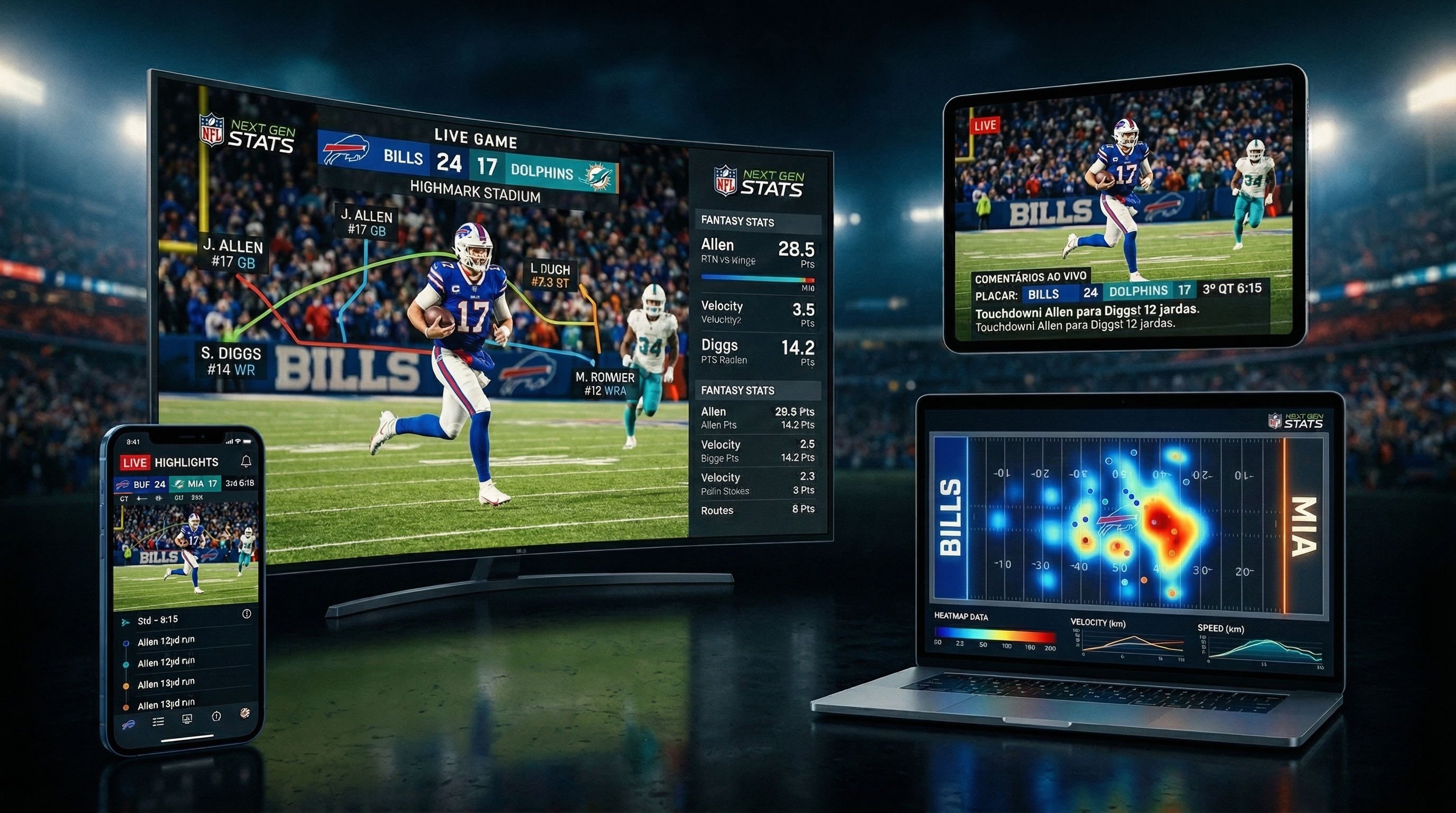
Apple, Amazon, and Netflix have adopted fundamentally different sports strategies. Apple treats sports as a loss leader to drive Apple TV+ subscribers—Sunday Ticket is positioned as a premium add-on that justifies a higher tier price, creating cross-ecosystem value (watch sports on TV, iPhone, and iPad seamlessly). Amazon uses sports to strengthen Amazon Prime's core loyalty proposition; Thursday Night Football and Premier League matches are bundled into standard Prime membership ($14.99/month), so sports becomes a free benefit of existing loyalty rather than a revenue center.
Netflix, traditionally entertainment-focused, is beginning to test sports content for the first time. Their 2025 sports documentaries (Drive to Survive extended, Will Smith tennis docuseries) suggest Netflix may enter the rights-bidding space starting with the 2026 renewal cycles. If Netflix bids for sports on a global scale, the fragmentation will intensify.
Traditional broadcasters (Disney, NBCUniversal, Paramount) are holding on through bundling. ESPN+ bundles with Disney+ for $14.99/month, increasing retention by 23% over ESPN+ standalone subscriptions. This defensive bundling suggests traditional media is losing direct sports viewership but retaining sports fans through ecosystem locks.
Which streaming service has the best sports content?
No single platform dominates all sports. Apple owns NFL, but lacks comprehensive NBA and MLB. Different services excel at different sports depending on exclusive windows.
No single platform dominates sports in 2026. Amazon Prime Video arguably has the broadest reach (NFL, Premier League, select NBA), but loses exclusive MLB content to Apple and Peacock. Apple controls the most premium exclusive window (NFL Sunday Ticket) but lacks comprehensive league coverage. ESPN+ remains the largest archive of historical sports content and continues deep integration with cable, but it's increasingly compartmentalized from mass consumer access.
For fans, "best" depends on which sport matters most. If you live for NFL football, Apple TV+ is mandatory. If soccer (Premier League) is your priority, Sky Sports or Amazon Prime Video (depending on region) dominate. For basketball, you still need ESPN, TNT+, and potentially Amazon for full coverage. The idea of a single "best" sports streaming service no longer exists.
What's coming next: The future of sports rights economics?
Two competing forces emerge: continued fragmentation for revenue maximization, or consolidation via bundling to fight subscription fatigue. The 2026 NFL negotiations will decide.
Industry analysts from MoffettNathanson and UBS predict that the 2026–2030 rights cycles will be the inflection point for sports broadcasting. Two competing forces are at work:
Force 1: Revenue maximization through continued fragmentation. If the trend continues, expect rights fees to rise another 20–40% during the next renewal cycles. Netflix may enter the bidding for global sports rights. YouTube (via YouTube TV and YouTube main platform) may bid for exclusive windows. The NFL's 2026 cycle will be the litmus test—if Apple and Amazon outbid traditional broadcasters again, fragmentation wins.
Force 2: Fan experience consolidation through bundling. Subscriber fatigue data suggests a ceiling on individual subscriptions. Expect more platform consolidation: Disney may launch a combined ESPN+/ABC/Marvel/Hulu sports beast; Warner Bros. Discovery may bundle Max (HBO Max) with sports to justify higher tiers. Amazon could use sports to create a unified Prime Video subscription tier structure. Direct-to-consumer models (NBA League Pass, MLB.tv) may invert toward bundling rather than standalone pricing.
The 2026 Negotiation Battleground
The NFL's 2026 rights cycle will determine the direction of sports broadcasting through 2030. The league owns the highest-value sports content globally. If Apple, Amazon, and Google outbid traditional broadcasters yet again, fragmentation continues and licensing fees spiral further. If traditional broadcasters (ESPN, Fox, CBS) fight back and consolidate rights, streaming may plateau as the primary sports distribution layer, with bundling replacing fragmentation. Analysts expect the NFL to generate $100–$110 billion total revenue across all broadcasters over the next 10-year cycle, up 30% from the current cycle. Where that money lands will reshape how fans access sports for the next decade.
What should you do about sports streaming fragmentation?
Prioritize by sport. Use bundling strategically (ESPN+ and Disney+ together). Wait for 2026 consolidation announcements. Explore league-direct subscriptions as cheaper alternatives.
If you're a sports fan being squeezed by rising subscription costs, your options are limited but real:
1. Prioritize by sport. Pick the one or two sports that matter most and optimize for that. If NFL is your sport, invest in Apple TV+ Sunday Ticket + one other service. Don't try to optimize for five sports across five services.
2. Use bundling strategically. Disney's ESPN+ bundle with Disney+ ($14.99/month) is better value than standalone components. Amazon Prime Video at $14.99/month includes sports, entertainment, and shipping—if you're already on Prime for delivery, sports is a free bonus.
3. Wait for market corrections. Fragmentation is unsustainable at current growth rates. Expect significant consolidation or unbundling announcements in 2026 as leagues and platforms negotiate the next cycle. New entrants (Netflix, YouTube, Google TV) will reshape the competitive landscape.
4. Explore league-direct subscriptions. NBA League Pass ($14.99–$29.99/month) and MLB.tv ($9.99/month or $79/year) are sometimes cheaper than piecing together fragmented broadcast access on mainstream platforms. Regional blackout rules still apply, but the per-game cost is often lower.
Sources
- NFL Media Rights — Official NFL sports broadcasting deals and partnerships
- Apple Newsroom — Sunday Ticket, Friday Night Baseball details
- AWS Sports Partnerships — Thursday Night Football, Premier League partnerships
- NBA Official News — 2025–26 Media Rights Cycle announcements
- Deloitte Media & Entertainment Report — 2024–2025 consumer subscription data
- ESPN Media Reports — MLB streaming and distribution data
- Disney Investor Relations — ESPN+ bundling and retention metrics
- Variety Media Reports — Sports rights deal analysis and commentary
Related Articles on Nexairi
Fact-checked by Jim Smart